7 Days Xinjiang Group Tour from Kashgar to Urumqi

7 Days / 6 Nights | Tashkurgan, Pamir Plateau, Alaer Golden Grasslands | Small Group / Private Tour Available

Price from: USD997 *

English-speaking local guide

3-4 star hotels incluided

Small group or private option

Book with a local travel agency

Book Your Tour

Status: Available

Price from: USD997 *

* (Price can be 10% lower or higher depending on the season.)

Status: Available

Single Tour Template

Duration

7 Days

Destinations

Kashgar | Tashkurgan | Kashgar | Urumqi | Tianchi Lake | Turpan

Group Size

Max12 people

Meals

Hotel breakfast

Physical level

Easy

Best time to go

March - November

Star Point

Kashgar

Guide language

English or Chinese

Tour summary

This Xinjiang tour combines the spirit of the ancient Silk Road with some of the most dramatic landscapes in western China. The journey begins in Kashgar, a historic city of bazaars, mosques, and Uyghur culture, before heading deep into the Pamir Plateau along the legendary China-Pakistan Highway, passing high-altitude lakes, snow-capped mountains, and remote frontier scenery.

The route then continues to Urumqi, the modern heart of Xinjiang, and Turpan, a historic oasis known for ancient ruins, traditional villages, centuries-old irrigation systems, and striking desert landscapes. It is an ideal journey for travelers seeking culture, history, wild nature, and a deeper connection with the multicultural legacy of the Silk Road.

Tour Highlights

7 Days Xinjiang Group Tour From Kashgar To Urumqi

Stone City (Tashkurgan Fort) Alaer Golden Grasslands

Pamir Plateau

Baisha Lake

Kashgar Old City

7 Days Xinjiang Group Tour From Kashgar To Urumqi

Heavenly Lake of Tianshan Urumqi Grand Bazaar

Stone City (Tashkurgan Fort) Alaer Golden Grasslands

7 Days Xinjiang Group Tour From Kashgar To Urumqi

Urumqi

Heavenly Lake of Tianshan Urumqi Grand Bazaar

Day 1: Kashgar Arrival | Airport Pick-up and Hotel Check-in

Day 2: Kashgar - China-Pakistan Highway - Tashkurgan | Pamir Plateau, Baisha Lake, Karakul Lake

Day 3: Tashkurgan - China-Pakistan Highway - Kashgar | Stone City (Tashkurgan Fort), Alaer Golden Grasslands

Day 4: Kashgar to Urumqi | Kashgar Old City, Id Kah Mosque

Day 5: Urumqi - Tianchi Lake - Urumqi | Heavenly Lake of Tianshan, Urumqi Grand Bazaar

Day 6: Urumqi to Turpan |Tuyoq Valley,Jiaohe Ancient City Ruins, Karez System, Emin Minaret

Day 7: Turpan to Urumqi Depature | Transfer Service and Airport See-off

Accommodations

7 Days Xinjiang Group Tour From Kashgar To Urumqi

Hotel 3-4 Stars

Category: 3-4 stars
Room configuration: Standard double room

Single Room Supplement

Meals

7 Days Xinjiang Group Tour From Kashgar To Urumqi

Including meals highlights

Breakfast at the hotel included

Reviews

Book Your Tour

Status: Available

Price from: USD997 *

Status: Available

* (Price can be 10% lower or higher depending on the season.)

Single Tour Template

Day -by- Day Journey: Tour itinerary

Day 1: Kashgar Arrival | Airport Pick-up and Hotel Check-in

Meal: None

Ni Hao! Welcome to Kashgar, the westernmost frontier city in China, known as a dazzling jewel on the ancient Silk Road. Upon your arrival at Kashgar airport, your tour guide and driver will greet you at the exit. They’ll then escort you directly to the downtown area and assist you with checking in at your hotel.

Note: We recommend choosing a morning flight to Kashgar, as you’ll need to apply for a border permit in advance (office hours: 10:30 AM–6:00 PM). This permit is required for entering border areas such as Tashkurgan County and the Pamir Plateau on the second day.

Kashgar (喀什), located in the southwestern part of Xinjiang, was historically known as Shule ( (疏勒国), and was one of the thirty-six kingdoms of the Western Regions (西域三十六国). For centuries, Kashgar has been a significant city in southern Xinjiang. It served as the western terminus for the northern, central, and southern routes of the ancient Silk Road, connecting Europe and Asia. It has long been a transportation hub and distribution center for goods between East and West. Trade is highly developed here, earning it the title of “Kingdom of Bazaars (markets).”

Diverse cultures from Asia and Europe converge on Kashgar, clashing and blending intensely with the local culture, injecting new vitality into Kashgar. This cultural fusion is specifically reflected in Kashgar Old City’s architecture, cuisine, and vibrant markets. The city has always been a melting pot of various ethnic groups, including Uyghurs, Han Chinese, Tajiks, and other nationalities. Additionally, located at the junction of the Pamir Plateau and the Tarim Basin, Kashgar also serves as a gateway to some stunning natural landscapes.

Day 2: Kashgar - China-Pakistan Highway - Tashkurgan | Pamir Plateau, Baisha Lake, Karakul Lake

This morning, your guide and driver will pick you up from your hotel in Kashgar to embark on an exhilarating road trip along the China-Pakistan Highway. Along the way, you can enjoy the beautiful landscape of Pamirs Plateau, visit Baisha Lake and Karakul Lake, admire the distant and mysterious Muztagh Ata Peak, Kongur Tagh, Kongur Tiube, and conclude in Tashkurgan. (Total distance: 300 kilometers, approximately 7-8 hours of travel)

The China-Pakistan Highway (中巴公路), also known as theKarakoram Highway (KKH), is one of the world’s highest paved international roads.  It connects China and Pakistan across the Pamir Plateau (帕米尔高原) and is locally referred to as the Pamir Highway. Historically, routes across the Pamir Plateau – known as Congling (葱岭) in ancient times – were vital parts of the Silk Road. This section posed one of the most daunting challenges for merchants and travelers due to its harsh, rugged terrain.   Here, several of the world’s renowned mountain ranges – the Himalayas, the Karakoram, the Kunlun Mountains, the Tianshan Mountains, and the Hindu Kush – converge and radiate outward, forming a massive mountainous junction. Today, the China-Pakistan Highway has transformed these perilous trade routes of the past into magnificent thoroughfares, attracting numerous tourists to the Pamir Plateau to experience its stunning natural scenery.

Along the way, you will visit the following attractions:

Baisha Mountain-Baisha Lake Scenic Area (白沙山白沙湖景区):

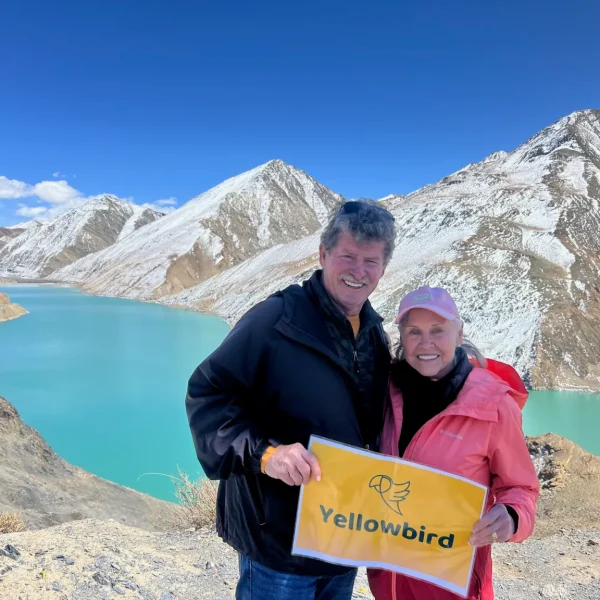
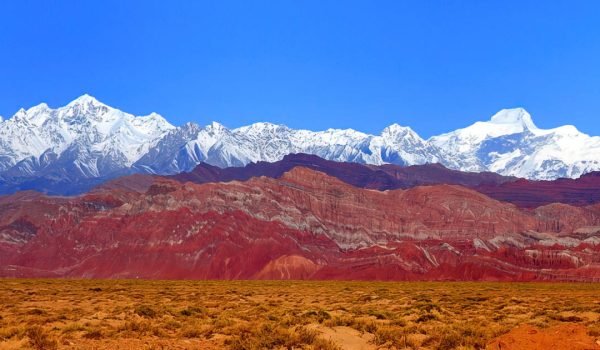
As you drive along National Highway G314, you’ll encounter Baisha Lake (白沙湖) , also known as Bulunkou Lake – a striking plateau lake nestled in the Pamir Plateau  (elevation:about 3,660 meters). From its shore, you’re treated to a stunning vista: half pristine blue water, and half white sand mountain, both harmonizing with distant snow-capped peaks to create a magnificent spectacle.

On the lake’s northern shore stands the renowned Baisha Mountain (白沙山), winding for over 1,200 meters. The dark mountain body, covered with white sand, presents a soft silvery-white color under the clean sunlight of the Pamir Plateau, resembling white silk. Legend has it that as the lake water gradually dries up in autumn and winter, the white sand at the bottom of the lake emerges. In spring, the wind blows this sand onto the mountain, creating the extraordinary spectacle of sand accumulating into a mountain. Whenever strong winds blow, Baisha Mountain emits a sound, earning it the name “Singing Sand Mountain.” The southern shore of the lake is embraced by a chain of snow-capped mountains, with the highest peak being Mount Kongur Tagh at an elevation of 7,530 meters, adding further grandeur and mystery to this captivating landscape.

Karakul Lake (喀拉库勒湖)

Karakul Lake is a high-altitude moraine lake (elevation:about 3,600 meters).Its name in the Kyrgyz language means “Black Lake,” attributed to its deep, dark waters. However, if you spend enough time by the lake, you will notice that it changes colors under different lighting conditions, appearing deep blue, emerald green, or ink black, earning it the nickname “the ever-changing lake.”

Yet, the true highlights of Karakul Lake are the imposing peaks known as the “Kunlun Trio” that tower behind it: Kongur Tagh, Kongur Tiube, and Muztagh Ata, with altitudes of 7,719 meters, 7,595 meters, and 7,546 meters, respectively. On clear days, their majestic reflections are perfectly cast upon the glistening surface of the lake, creating the most iconic views of Karakul Lake. Among these, Muztagh Ata is particularly striking, covered with many glaciers, and is known as the “Father of Ice Mountains.”

Afterward, drive to Tashkurgan County (塔什库尔干from accommodation.

Day 3: Tashkurgan - China-Pakistan Highway - Kashgar | Stone City (Tashkurgan Fort), Alaer Golden Grasslands

Today, you will be exploring Tashkurgan County before driving back to Kashgar along the scenic China-Pakistan Highway.

Tashkurgan or Taxkorgan, officially known as Tashkurgan Tajik Autonomous County (塔什库尔干塔吉克自治县), is situated in the eastern part of the Pamir Plateau, at an elevation of about 3,600 meters. In Uyghur, Tashkurgan means “Stone Fort,” a name derived from the ancient stone fortresses located to the north of the town. It has the unique geographical advantage of being “one county bordering three countries,” namely Tajikistan, Afghanistan, and Pakistan. As the final pass of the Silk Road within China’s borders, Tashkurgan has been both an outlet for Central Plains civilization and a gateway for religious transmission throughout history.

After breakfast, you will set out to explore Stone City (石头城), also known as Tashkurgan Fort, a fortress of great strategic importance on the ancient Silk Road. Archaeological evidence  During the Han period, it was once the capital of the Puli Kingdom (蒲犁国) one of the thirty-six states of the Western Regions (西域三十六国). After the Tang Dynasty unified the Western Regions, it became the largest post station on the ancient Silk Road crossing the Congling (Pamir Plateau). The renowned Chinese Buddhist monk Xuanzang (玄奘) stopped here to preach for 22 days on his return journey from India.

It is built on a high hill, with an extremely steep terrain, mainly constructed from piled stones, forming a unique stone city landscape. For travelers, it is a fantastic experience to explore the city ruins, witness the vicissitudes of the ancient city, and imagine how many merchants, monks, and explorers once traveled westward or eastward from here, or ponder how the Tajik ancestors, over a thousand years ago without advanced tools, managed to complete such a massive and magnificent project.

Following your visit to the fort, you will explore the expansive golden grasslands (金草滩) at the foot of the Stone City. This area, known as Alar National Wetland Park, comprises wetlands, meadows, rivers, marshes, snow-capped mountains, and plateaus. The Tashkurgan River flows through this area, where lush water and grass abound, and livestock roam freely, blending beautifully with the distant snow-capped mountains, white clouds, and blue sky. When the setting sun casts its light, the verdant grasslands turn a golden hue, and in the distance, the herders’ white felt tents and flocks of sheep are bathed in the sunset as if cloaked in a golden glow. Hence, this area is aptly named “Golden Grasslands.”

Lastly, you will leave Tashkurgan and drive back to Kashgar city along the scenic China-Pakistan Highway. This journey is not merely a return trip but a continuous discovery of the profound and majestic beauty that defines the Pamir Plateau. You’ll have the opportunity to admire the spectacular snow-capped peaks from various angles on both sides. Muztagh Ata, Kongur Tagh, and Kongur Jiubie Peak form a triangular configuration, standing like towering pillars on the Pamir Plateau.

Stay overnight in in Kashgar city.

Day 4: Kashgar to Urumqi | Kashgar Old City, Id Kah Mosque

Your exploration can begin in Kashgar Old City (喀什老城市). The Old City is the soul of Kashgar, encapsulating over two millennia of cultural and commercial exchanges along the Silk Road. Situated at the heart of the city and spread across 3.6 square kilometers, the Old City is a living museum, telling tales of ancient trade and cultural fusion. As a crucial hub for East-West traffic and a distribution center for goods, it offers a vivid glimpse into past prosperity.

Within Kashgar Old City, the streets and alleys intersect intricately, narrow and winding paths with buildings of varying heights, creating a layout that resembles a maze. As you wander through, you’ll see traditional Uyghur mud-brick houses and numerous structures with Islamic features, such as pointed arches, domes, intricate woodcarvings, and colorful ceramic tiles. These architectural and street designs perfectly Central Asian and Islamic architectural elements with Uyghur characteristics, creating a sense of time travel for visitors.

The Kashgar Old City thrives with commercial activity, with numerous bazaars and street markets scattered throughout, such as the Pottery Bazaar, Flower Pot (Doppa) Bazaar, Blacksmith Bazaar, Woodwork Bazaar, Medicine Tea Bazaar, Han Bazaar (Food Street)… This area is not only an excellent place to purchase and appreciate various handicrafts but also an ideal spot to savor Uyghur cuisine. Indulge in succulent lamb kebabs (羊肉串), rich and spicy lagman noodles (拉条子), savory samsas (烤包子), and freshly baked Naan (囊). As you wander through, the scenes, sounds, and scents on the streets seem to transport you back to the heyday of the Silk Road. You can almost visualize the bustling caravans, with merchants from China, Persia, Arabia, and many local regions converging here. The air is filled with the melodious ringing of bells on camels’ necks. Furthermore, Kashgar Old City is a hub for numerous cultural and religious activities as well as a place for residents’ daily lives and social interactions. One of the most notable landmarks is Id Kah Mosque(艾提尕尔清真寺), one of the largest mosques in China, attracting thousands of worshippers daily.

After the tour, you’ll be escorted to the airport for your flight to Urumqi. Upon arrival at Urumqi airport, your local tour guide will greet you and accompany you to downtown Urumqi.

Day 5: Urumqi - Tianchi Lake - Urumqi | Heavenly Lake of Tianshan, Urumqi Grand Bazaar

Today, you’ll embark on a full-day exploration, from the breathtaking natural beauty of Tianshan Tianchi Lake to the enlightening exhibits at the Xinjiang Regional Museum.

In the morning, you’ll be driven approximately 70 kilometers (about 1-1.5 hours) to Heavenly Lake of Tianshan (天山天池), a UNESCO World Heritage Site. Nestled at an elevation of around 1,980 meters (6,500 feet) above sea level, this serene alpine lake is surrounded by lush forests, snow-capped peaks, and breathtaking landscapes. Renowned for its crystal-clear waters, panoramic Bogda mountain views, and connections to ancient myths and legends, Heavenly Lake is a must-see. One such legend involves the Queen Mother of the West (Xi Wangmu), who is said to have hosted a banquet for the Eight Immortals here.

Upon arrival, you’ll first take 40-minute sightseeing bus ride through the dramatic mountains. Then, enjoy 10-minute walk to the picturesque lake. Enjoy a leisurely stroll around Heavenly Lake, taking in the fresh mountain air and diverse flora and fauna.

Optional Activities (additional fee required):

  1. Boat Ride:Cruise across the peaceful waters of the lake, immersing yourself in its beauty and the reflections of the snow-capped mountains.
  2. Cableway Ride:Take a cableway up to Mayashan for even more stunning views of Bogda Mountain.

After lunch, return to Urumqi and visit the Urumqi Grand Bazaar, also known as the Xinjiang International Grand Bazaar, is a vibrant marketplace and a perfect way to spend your free time. Explore the many shops and stalls offering various local products, including traditional Uyghur clothing, carpets, handmade crafts, silk scarves, jewelry, spices, and dried fruits. Be sure to try local favorites such as lamb kebabs, polu (pilaf), naan bread, and laghman (hand-pulled noodles). Additionally, the architecture of the Grand Bazaar itself is worth admiring with its grand minarets, domes, and intricate Islamic-inspired designs.

After the tour, return to your hotel in Urumqi.

Day 6: Urumqi to Turpan |Tuyoq Valley,Jiaohe Ancient City Ruins, Karez System, Emin Minaret

After breakfast, embark on a scenic 3-hour drive (180 km) from Urumqi to Turpan. Along the way, you’ll pass the striking Salt Lake and the impressive wind power station, the largest in Asia, at the foot of the Tianshan Mountains.

Turpan (吐鲁番) is located in the eastern part of Xinjiang. Situated in the Turpan Depression at 154 m below sea level, it’s the second-lowest depression in the world and the hottest spot in China, earning it the nickname “Fire Land.”

Despite its arid climate, the ingenious Karez irrigation system has transformed this desert region into a fertile oasis, renowned for its agriculture, especially grape production. As a crucial stop on the ancient Silk Road, Turpan served as a hub for trade and cultural exchange between East and West. The area is dotted with historical sites – ancient city ruins, remnants of fortifications, and Buddhist cave complexes – testifying to its rich cultural roots.

Upon arrival in Turpan, you will drive to Tuyoq Valley along the Flaming Mountain Grand Canyon. The Flaming Mountains (Huoyan Shan), named for their intense heat and reddish-brown sandstone that appears to glow like fire under the desert sun, are one of Turpan’s most iconic landscapes. Stretching over 100 kilometers from east to west, these eroded hills create a striking, otherworldly view. Along the way, we can stop for photos.

The winding road along the cliffs of the Flaming Mountains will soon lead you to Mazar Village (麻扎村), nestled in the Tuyoq Valley (吐峪沟). It is the oldest surviving Uyghur village, with a history of over 1700 years. The mud-constructed town offers a glimpse of traditional Uighur life and architecture. Here, every household grows mulberry, apricot, or jujube trees around their homes. The doors are adorned with colorful paintings of flowers and fruits, and the window lattices are also decorated with a variety of motifs. The ancestors of Mazar Village, adapting to the local environment and survival needs, ingeniously used locally sourced yellow clay to construct their homes. This has resulted in one of the best-preserved earthen architecture complexes in China today. The earth-toned dwellings adorned with colorful door frames, set against the backdrop of red mountains, are extremely photogenic.

Next, visit to Jiaohe Ancient City (交河故城), one of the best-preserved ruins of ancient cities along the Silk Road and inscribed on the UNESCO World Heritage List as part of the joint application “Silk Roads: the Routes Network of Chang’an-Tianshan Corridor.” Jiaohe Ruins offers a profound glimpse into ancient city planning and the historical complexity of the civilizations on the Silk Road.

Nestled between two deep river valleys, Jiaohe, meaning “the confluence of two rivers,” is strategically positioned on a large, steep plateau that provides formidable natural defenses. As a key city connecting the Central Plains (中原) and the vast regions of the Western Regions (西域), Jiaohe Ancient City played a vital role in the transportation network of the Silk Road. It witnessed the bustling trade along the Silk Road and the exchange and integration of Eastern and Western cultures.

Unlike many ancient cities, its structures were not built up from the ground but carved down into the existing plateau of loess soil. Walking through the ruins, you can see the remains of government offices, residential houses, Buddhist stupas, and temples. These remnants not only provide important physical evidence for studying the history and culture of the Silk Road but also offer valuable insights into the social, economic, and religious life that shaped this region.

Tips: There is no shelter inside the ruin, so be mindful of sun protection.

The History of Jiaohe Ancient City

The Ancient City of Jiaohe witnessed the development of civilization in the Western Region and the Silk Road. Approximately 2,000 years ago, it was established as the capital of the Jushi Kingdom (车师国), one of the 36 kingdoms in the Western Regions (西域三十六国). Following Zhang Qian’s pioneering efforts during the Western Han Dynasty to carve a path through the Western Regions, Jiaohe City emerged as a crucial hub on the Silk Road. In 60 BC, the Han Dynasty central government established the Protectorate of the Western Regions (西域都护府) to administer the various states in the region, officially incorporating the Western Regions into the Chinese domain. During the Northern and Southern Dynasties, Jiaohe became a county under the jurisdiction of Gaochang(高昌). The city reached its zenith during the Tang Dynasty with the establishment of the Anxi Protectorate (安西都护府), marking a new era in the governance of the Western Regions. During this period, Jiaohe was a bustling center of international trade and vibrant cultural exchanges among diverse ethnic groups. From the 19th to the 14th century, due to the impact of wars, Jiaohe gradually declined and eventually became a ruin.

Afterwards, head to the Karez System (坎儿井) to learn about the ancient underground irrigation system a few thousand years ago and how this system has benefitted the people along the desert’s edge, transforming barren land into a lush oasis. This traditional engineering marvel is considered one of China’s three great ancient engineering projects, alongside the Great Wall and the Grand Canal. It has been recognized in the 2024 World Irrigation Project Heritage list.

The origin of the Karez Irrigation System

Turpan, in Xinjiang, is one of China’s most arid regions, with annual rainfall of only 16 millimeters and evaporation exceeding 3,000 millimeters. These extreme conditions have led to severe surface water scarcity. To improve their survival prospects, people ingeniously utilized the natural slope of mountains to channel underground rainwater, glacial melt, and snowmelt from spring and summer to the surface for irrigation. This method greatly reduced water loss through surface evaporation, meeting the water needs of this arid region. It’s often said, “Without the Karez, there would be no Turpan; without the Karez, there would be no civilization in Turpan.” The Karez has turned extremely arid basins into green havens, making Turpan a crucial corridor for East-West exchanges along the Silk Road and a place where diverse cultures converge and coexist.

The Karez system is often referred to as the “Underground Great Wall“. In Xinjiang, there are over 1,700 karez wells which, if connected, would stretch over 5,000 kilometers, forming a vast underground river network. It is estimated that the Karez system has a history of over 2,000 years. Imagine centuries ago, without modern measuring tools or mechanical assistance, how ancient people located underground water sources, determined the gradient and direction in complete darkness, and connected such lengthy channels. Today, you have the opportunity to step into the Karez and personally unravel the secrets of this most mysterious hydraulic engineering project, experiencing first-hand how ancient innovation works.

Next, continue your exploration at the Emin Minaret (额敏塔), the tallest Islamic minaret in Xinjiang. Also known as Sugong Ta (苏公塔), this remarkable structure was erected in 1778 by the local ruler Suleiman, in tribute to his father, Emin Khoja, whose considerable efforts helped maintain national unity.

It stands 44 meters (144 feet) tall and is made from sun-dried bricks, which give it a distinct, earthy color. The tower’s cylindrical body tapers elegantly as it rises, topped by an ornate, pointed dome. Uyghur artisans crafted up to 15 different types of brick patterns, including waves, diamonds, floral clusters, and crosses, which create endlessly looping designs around the tower. Gazing up from beneath the tower, you can fully appreciate the simplicity and grandeur of these designs. The accompanying mosque is an integral part of the complex, which you can visit as well. Emin Minaret serves not only as a religious structure but also as a cultural icon for the Uyghur people, embodying a unique blend of Islamic and Uyghur architectural traditions.

After the tour, be escorted to your hotel in Turpan.

Day 7: Turpan to Urumqi Depature | Transfer Service and Airport See-off

On this day, you’ll be transferred from Turpan to Urumqi airport for your flight departure (about 3-hour drive).

Book Your Tour

Status: Available

Price from: USD997 *

Status: Available

* (Price can be 10% lower or higher depending on the season.)

Single Tour Template

Join a Small Group - Fixed Departure Dates

Choose one of the scheduled departures below to join the group

Arrival DateDeparture DatePriceAvailability
Apr 30, 2026May 6, 2026$997Book Now
May 7, 2026May 13, 2026$1169Book Now
May 14, 2026May 20, 2026$1169Book Now
May 31, 2026Jun 6, 2026$1169Book Now
Jun 7, 2026Jun 13, 2026$1169Book Now
Jun 18, 2026Jun 24, 2026$1169Book Now
Jul 1, 2026Jul 7, 2026$1245Book Now
Jul 15, 2026Jul 21, 2026$1245Book Now
Jul 29, 2026Aug 4, 2026$1245Book Now
Aug 12, 2026Aug 18, 2026$1245Book Now
Aug 26, 2026Sep 1, 2026$1245Book Now
Sep 3, 2026Sep 9, 2026$1245Book Now
Sep 17, 2026Sep 23, 2026$1245Book Now
Oct 7, 2026Oct 13, 2026$1245Book Now
Oct 14, 2026Oct 20, 2026$1245Book Now
Oct 21, 2026Oct 27, 2026$1245Book Now
Oct 28, 2026Nov 3, 2026From $997Book Now
Nov 4, 2026Nov 10, 2026From $997Book Now

Tour Details: Inclusions & Exclusions

What is included

  • Transportation
  • Economy class air ticket from Kashgar to Urumqi (including a 20kg checked luggage allowance).
  • Accommodation
  • Standard double room (basic room type). Note: A king-size bed (natural single room) is not guaranteed. No breakfast will be provided for passengers who do not occupy a bed.
  • If there are single male or female travelers in the group, the travel agency will assist in arranging shared accommodation with other solo travelers of the same gender if available. If shared accommodation cannot be arranged, the solo traveler must pay the single room supplement.
  • Meals
  • Hotel breakfast is included. Lunch and dinner are at the traveler’s own expense, and the tour guide will assist with arrangements.
  • Tickets
  • First-entry tickets for all scenic spots listed in the itinerary, as well as necessary on-site transportation such as shuttle buses.
  • In case of unforeseen circumstances that prevent a visit to a scheduled scenic spot, an alternative attraction will be arranged after consultation with the travelers.
  • Vehicle Service
  • Full vehicle usage fees (including tolls, fuel costs, and mountain entry fees). Vehicle services are at the traveler’s own expense during free time.
  • Vehicles are allocated based on the number of travelers. No refunds for vehicle fees will be given if travelers voluntarily abandon any part of the itinerary.
  • Airport/Station Transfers
  • This is a shared group tour. For airport/station pick-up and drop-off, travelers with similar schedules will be grouped together, and waiting time may be approximately 1.5 hours.
  • Staff or sales personnel will confirm the transfer time with travelers one day in advance. If travelers do not wish to wait, they may notify the travel agency one day in advance to arrange a private transfer at their own expense.
  • Tour Guide Service
  • Professional English-speaking tour guide service.
  • For shared group tours, requests for specific tour guides cannot be guaranteed. The travel agency will assign guides based on actual operational requirements.
  • Insurance
  • Comprehensive travel insurance coverage, including travel accident insurance, tour vehicle seat insurance, and travel agency liability insurance (all three types of insurance are included).
  • Complimentary Service
  • 2 free bottles of mineral water per person per day.

What is not included

  • Transportation
  • Long-distance transportation costs to and from the destination.
  • Single Room Supplement
  • Costs incurred for single occupancy of a room.
  • Personal Expenses
  • Laundry services, telephone calls, faxes, pay TV, beverages, snacks, tobacco, alcohol, and other personal consumptions within the hotel.
  • Unforeseen Circumstances
  • The travel agency reserves the right to cancel or modify the itinerary due to force majeure, non-tour agency reasons (e.g., natural disasters, wars, strikes, epidemics), airline flight adjustments, or insufficient number of participants. Additional costs arising from such changes will be borne by the travelers.
  • Gratuities
  • Recommended gratuity: 40–70 RMB per person per day for the tour guide.
  • Recommended gratuity: 20–50 RMB per person per day for the driver.

Physical level

New Single Tour Template
Easy

Best Time to go

New Single Tour Template
March – November

Important Trip Notes

We recommend choosing a morning flight to Kashgar, as you’ll need to apply for a border permit in advance (office hours: 10:30 AM–6:00 PM). This permit is required for entering border areas such as Tashkurgan County and the Pamir Plateau on the second day.

Kashgar Arrival Ideas:

By Air: Kashgar International Airport (IATA: KHG, ICAO: ZWSH) is one of China’s westernmost airports. Domestic flights connect Kashgar to major Chinese cities, including:Urumqi (about 2 hours), Lanzhou (about 4 hours), Beijing (about 6 hours), Shanghai (about 7 hours), Xi’an (about 5 hours), Chengdu (about 5 hours), and Guangzhou (about 7 hours). Some international flights from nearby Central Asian countries may also fly into Kashgar.

From BordersThe Torugart Pass and Irkeshtam Pass are important channels between China and Kyrgyzstan. The Karasu Port is a crucial gateway between China and Tajikistan. The Khunjerab Pass is the only land border crossing between China and Pakistan. If you plan to arrive via a land border, please contact your travel advisor for specific costs and arrangements.

Booking Conditions

Tour Sales Conditions Summary:
Documentation: Passport required for booking (tickets, hotels, insurance).

Payment:

  • Departure ≤1 month: Full payment immediately.
  • Departure >1 month: 50% deposit + balance due 1 week to 1 month prior to departure.

Process:

  • Group: Choose an existing tour or we will recommend one based on destination/dates/number of people → payment → confirmation invoice.
  • Individual: We design a customized itinerary → approve itinerary + hotels + quote → payment → invoice.

Delivery: Guide/transportation contact information provided 1-3 days prior to departure.

Detailed terms available.

Travel Protection

Accident insurance included during the tour. Optional travel insurance:

Optional travel insurance to protect your booking. Protect your investment.


Payment Guide

Offline Payment
Bank transfer Bookings are subject to verification (Booking Request).

Online Payment

Logo Payments Yellowbordtour

Credit Card Guaranteed (Confirmed Booking).

Pay with deposit | Pay the total

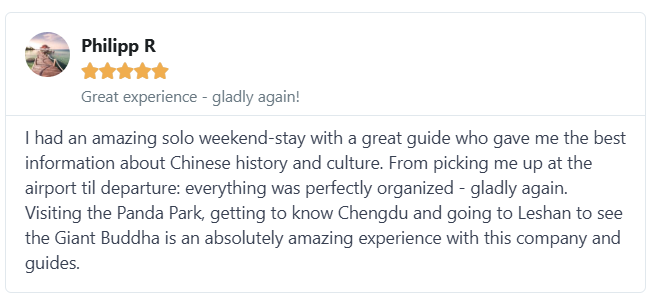
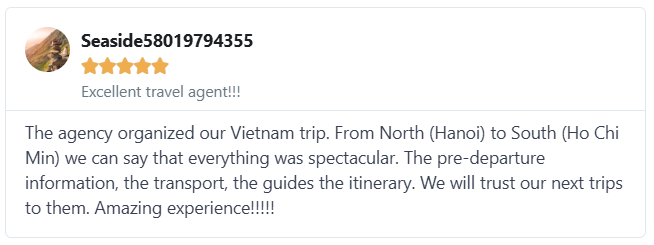
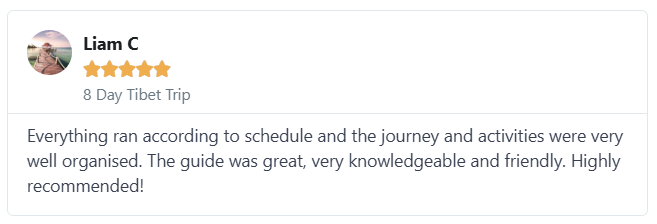
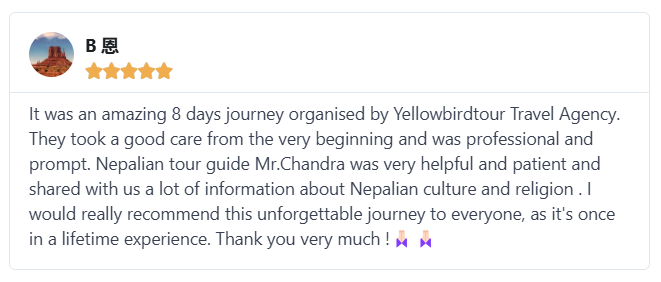
Yellowbird, Reviews tripadvisor

Reviews from Our Travelers

These reviews are the subjective opinion of a Tripadvisor member and not of Tripadvisor LLC. Tripadvisor performs checks on reviews as part of our industry-leading trust & safety standards. Read our transparency report to learn more.

It depends on your nationality. As of 2025–2026, China has expanded its visa-free entry program to travelers from a growing number of countries — many for stays of up to 30 days for tourism, business, family visits, or transit purposes. The policy is valid through December 31, 2026, with a maximum stay of 30 days per visit.

If your country is eligible for visa-free entry, you’ll typically need:

  • A valid passport (at least 6 months before expiry, 2 blank pages recommended)
  • Proof of onward/return travel
  • Accommodation confirmations
  • Travel insurance (recommended)

If your country is not on the visa-free list, you’ll need to apply for a standard Chinese tourist visa (L visa) before travel. Upon booking, YellowBird Tour provides official itinerary confirmations, hotel bookings, and invitation letters — all required for your visa application at a Chinese embassy or consulate.

📌 Visa policies change frequently. Always verify your specific eligibility before booking.

Each tour has a different physical profile — we always specify the difficulty level on the individual tour page. As a general guide:

  • Easy / Cultural tours — light walking on mostly flat terrain; suitable for most fitness levels and families.
  • Moderate tours — expect 4–6 hours of walking per day, some uneven ground or stairs.
  • Active / hiking tours — terrain can range from restored stone to rugged, uneven steps; plan for 5–7 hours of walking on hiking-focused days.
  • High-altitude or trekking tours (e.g., Tibet, Kailash) — these involve long walking days, significant elevation, and temperature swings. Altitude can feel tougher than distance.

We recommend checking the specific difficulty rating on each tour page and consulting with our team if you have any health concerns or mobility considerations.

International and domestic flights are not included in our tour prices. Our tours are land-based packages — this gives you the flexibility to book flights from your preferred city, airline, or with your own frequent flyer points.

What IS included in most tours:

  • Airport pickup and drop-off
  • Professional English-speaking guide
  • All ground transportation during the tour
  • Hotel accommodation (twin/double share basis)
  • Daily breakfast + select meals as specified
  • Entrance fees to all listed sites
  • One bottle of water per person per day

Our team is happy to advise on the best arrival airports and flight timing to match your tour dates.

Absolutely — yes! Solo travelers are warmly welcome on all YellowBird tours. Our small-group format makes it easy to connect with like-minded travelers from around the world.

Practical note on accommodation:
If you’re traveling solo and prefer to share a room to avoid the single supplement fee, we can try to match you with another solo traveler of the same gender. Please note that we cannot guarantee the availability or compatibility of a roommate.  If you’d prefer your own private room, a single supplement fee applies (varies by tour — see individual tour page for details).

💬 Traveling solo doesn’t mean traveling alone — our groups are friendly, international, and expertly guided.

What Makes Us the Best Travel Agency for Asia?

Single Tour Template

Meet Our Expert Local Team

Jessie Asia tour group yellowbirdtour

Jessie | Founder

Penny Asia tour group yellowbirdtour

Penny | China travel consultant

Dawei Asia tour group yellowbirdtour

Dawei | Tour guide / operator

Andrew Asia tour group yellowbirdtour

Andrew | Touir guide / operator

Asia Group Travel | Specialized Group Travel Services

All our tours are including comfortable and centrally located hotels, top-rated assistance in case of need, and amazing experiences that you’ll never forget.

Special Offer

China Tours

Ancient Wonders & Modern Marvels

India Tours 

Colors, Culture & Traditions

Japan Torus

Tokyo, Kyoto, Nara & Osaka

Cambodia Tours

Temples, History & Mystique

Vietnam Tours 

Landscapes, Cuisine & Heritage

Nepal Tours 

Himalayan Adventures & Spiritual Journeys

Mongolia Tours


Kharkhorin, Khustain National Park

Philippines Tours


Manila & Boracay

Thailand tours


Bangkok, Chiang Mai & Phuket

Indonesia tours 


Bali, Nusa Penida & more

Bhutan Tours

The Last Shangri-La

Sri Lanka Tours


Colombo, Dambulla, Ella

Egypt Tours


Cairo, Luxor, the Pyramids of Giza, Sphinx, Karnak Temple

Book directly with a local operator – no middlemen, no hidden fees.

Traditional travel agency service – real people, not bots.

Personalized planning – every tour can be adapted to your needs.

Direct communication with our local team before and during your trip.

Enquiry & Booking

Book Your Tour

Tour: 7 Days Xinjiang Group Tour from Kashgar to Urumqi
Status: Available

Price from: USD997 per person *

Status: Available

* (Price can be 10% lower or higher depending on the season.)

Single Tour Template
//
Need help? Our expert support is available for all your tour and booking needs. Message us on WhatsApp for instant travel support.
Hi there! 👋 How can we assist you with your Asia travel plans today?
Cropped-noun-parrot-739612.png

Play Yellowbird Travel Match and let destiny choose your trip

Sometimes the best journey is the one you didn’t plan.
Just 3 quick questions to reveal your surprise Asia tour.

We’ll use your answers to suggest a real Asia tour that fits you. We never share your email or track your behavior.

Enquiry & Booking

Book directly with a local operator – no middlemen, no hidden fees.

Tour : 7 Days Xinjiang Group Tour from Kashgar to Urumqi
Number of travelers

Enquiry & Booking

Join a Small Group 7 Days Xinjiang Group Tour from Kashgar to Urumqi

Number of travelers