 English

Travel through Asia
China in September & October 2026: Golden Week, Weather & Best Places
⚠ China autumn travel alert: September–October 2026 China has two major public holiday periods coming
 EnglishEnglish


If you’re reading this travel to China guide for first-time visitors, you’ve probably already done the exciting part — chosen your destinations, started dreaming about the Great Wall, and maybe even booked your flights. But here’s what nobody tells you before you board that plane: the moment you land, a very different kind of challenge begins.
It’s about getting your phone connected, figuring out how to pay for a bottle of water, booking a taxi without speaking a single word of Mandarin, and ordering dinner when the restaurant has zero English on the menu.
This first-time visitor guide to China covers exactly that: your first 24 to 48 hours on the ground. Think of it as the practical layer that sits underneath all the beautiful itineraries — the setup that makes everything else work.
For broader trip planning — visas, destinations, and full itineraries — start here first:
👉 The Complete Traveler’s Guide to China
Before we get into apps and SIM cards, there is one thing every first-time traveler to China needs to understand clearly.
China has its own internet ecosystem. Google, Gmail, Google Maps, Google Translate, WhatsApp, Facebook, Instagram, and YouTube are blocked by the Great Firewall. This is not a glitch. It is how the internet works in mainland China.
If you land in China with no preparation, your phone will feel half-broken. Apps won’t load. Maps won’t work. Your translator will fail you at the worst moment — in front of a menu you can’t read.
The good news: there are clean solutions, and this China travel guide for first-time visitors walks you through all of them, starting with the most urgent.

Your hotel Wi-Fi alone is not enough. The moment you step outside — into the metro, onto the street, into a restaurant — you need mobile data on your phone. Without it, you can’t:
This is where many first-time visitors to China get confused: there are two types of data solution, and they serve different purposes.
An eSIM from providers like Holafly, Airalo, or Nomad gives you mobile data that works inside China. You install it before you fly — no queuing at the airport, no hunting for a SIM shop when you land.
But there is something critical to understand:
Most international eSIMs do not include a Chinese phone number (+86). They give you data only. This means:
📌 Golden rule for first-time visitors to China: If you use an international eSIM, register Alipay and WeChat with your foreign number before you fly. Once inside China, your home number may struggle to receive international SMS reliably.
Some eSIM providers like Holafly include a built-in VPN that lets foreign apps work — Google, WhatsApp, Instagram. Others provide Chinese data only, with no VPN. Check before you buy which type you are getting.
If you want to register on Meituan, Taobao, or other Chinese apps that require a +86 number, the solution is to buy a physical SIM from a Chinese carrier at the airport when you land.
The main carriers with counters at major Chinese airports are China Unicom and China Mobile. You only need your passport.
Advantages:
Disadvantage: you need to handle this immediately after landing, before leaving the airport arrivals hall.
💡 Tip for first-time visitors: If you plan to use Meituan for food delivery or Taobao for shopping, a local SIM with a Chinese number saves considerable frustration when registering.
Whether you use an eSIM or a local SIM, both give you internet access inside China’s network. But the Great Firewall blocks everything Western: Google, Google Maps, Google Translate, WhatsApp, Instagram, Facebook, YouTube.
A VPN gives you access to the outside internet — and with it, Google Translate, which is your number-one survival tool as a traveler who doesn’t speak Chinese.
The most important rule in this China travel guide for first-time visitors: you cannot download a VPN once you are inside China. The VPN provider websites are blocked too. Install it and test it before you board the plane.
The most consistently recommended VPNs for China travelers in 2026:
VPN performance in China can fluctuate, especially around national holidays or politically sensitive dates. Having two VPNs installed as a backup is a smart precaution.
| What | Why |
|---|---|
| International eSIM installed | Mobile data from the moment you land, no queuing |
| OR physical local SIM at the airport | If you need a Chinese number for Meituan / Taobao |
| Alipay and WeChat registered with your foreign number | Do this before flying — you need to receive SMS |
| VPN installed and tested | Access to Google, WhatsApp, Instagram, your bank |
| Key apps downloaded with offline packs | Work even when VPN is slow |
| Hotel address saved in Chinese characters | Essential for taxis and Didi drivers |

China is one of the most cashless countries on Earth. Mobile payment is the default — not a convenience but an expectation. Street vendors, small restaurants, convenience stores, transport apps, and online platforms all use it.
As a first-time visitor to China, your two main options are Alipay and WeChat Pay, both of which accept international Visa and Mastercard. You do not need a Chinese bank account or a Chinese phone number to use either.
Both apps require SMS verification when you sign up. Register using your home phone number while you’re still at home. If you wait until you’re in China with an international eSIM that has no Chinese number, the verification SMS may not arrive reliably.
Register Alipay and WeChat on your home Wi-Fi, before departure.

This is one of the most common problems in any practical China travel guide for first-time visitors — and one of the easiest to avoid if you know about it in advance.
When you link a foreign bank card to Alipay or WeChat Pay, the card is technically added, but not fully activated for app-based or online payments. Many foreign banks require a first transaction at a physical point-of-sale terminal to authorize the card for overseas use before approving in-app charges.
This means: if your first attempt to pay is buying a metro ticket through an app or paying inside Didi, your bank may decline it — not because Alipay is broken, but because your card has never been used physically in China.
The fix: Make your very first payment at a physical shop — a convenience store, a café, a hotel gift shop — anywhere with a card reader. Tap or insert your card in person first. After that, your bank recognizes the card as active in China and your Alipay or WeChat Pay transactions will go through.
For the full step-by-step payment setup:
👉 How to Pay in China as a Foreigner in 2026

Let’s be honest about something that most travel guides to China gloss over. Outside Shanghai, Beijing, and a handful of international hotels, English is not widely spoken. A regular taxi driver in Chengdu, Xi’an, Guilin, or almost any second or third-tier city will almost certainly not speak English. Trying to explain your destination out loud will be stressful for everyone.
Didi solves this completely. It’s China’s dominant ride-hailing app, it has a full English interface, and all communication with the driver happens automatically inside the app in Chinese. You never need to say a word.
Didi also has built-in pre-set messages already translated into Chinese that you can send directly to your driver — for example: “No need to call me, I will wait at the pickup point.”
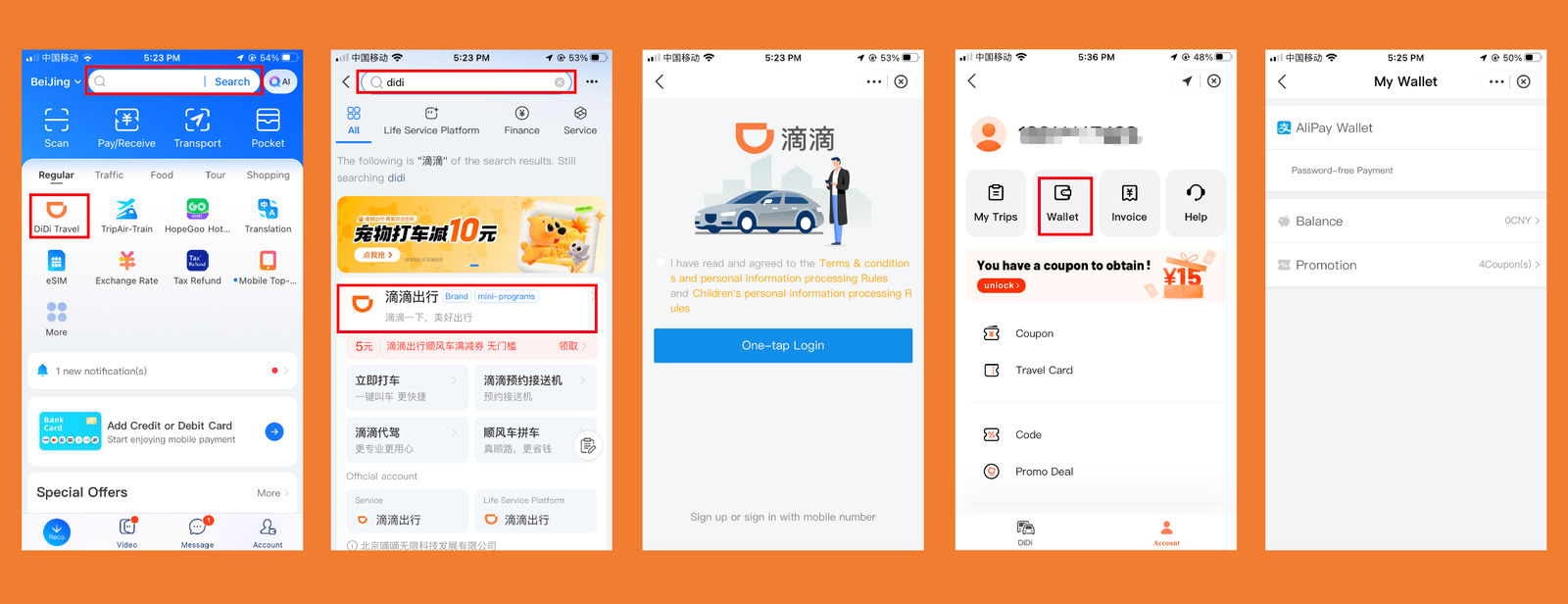
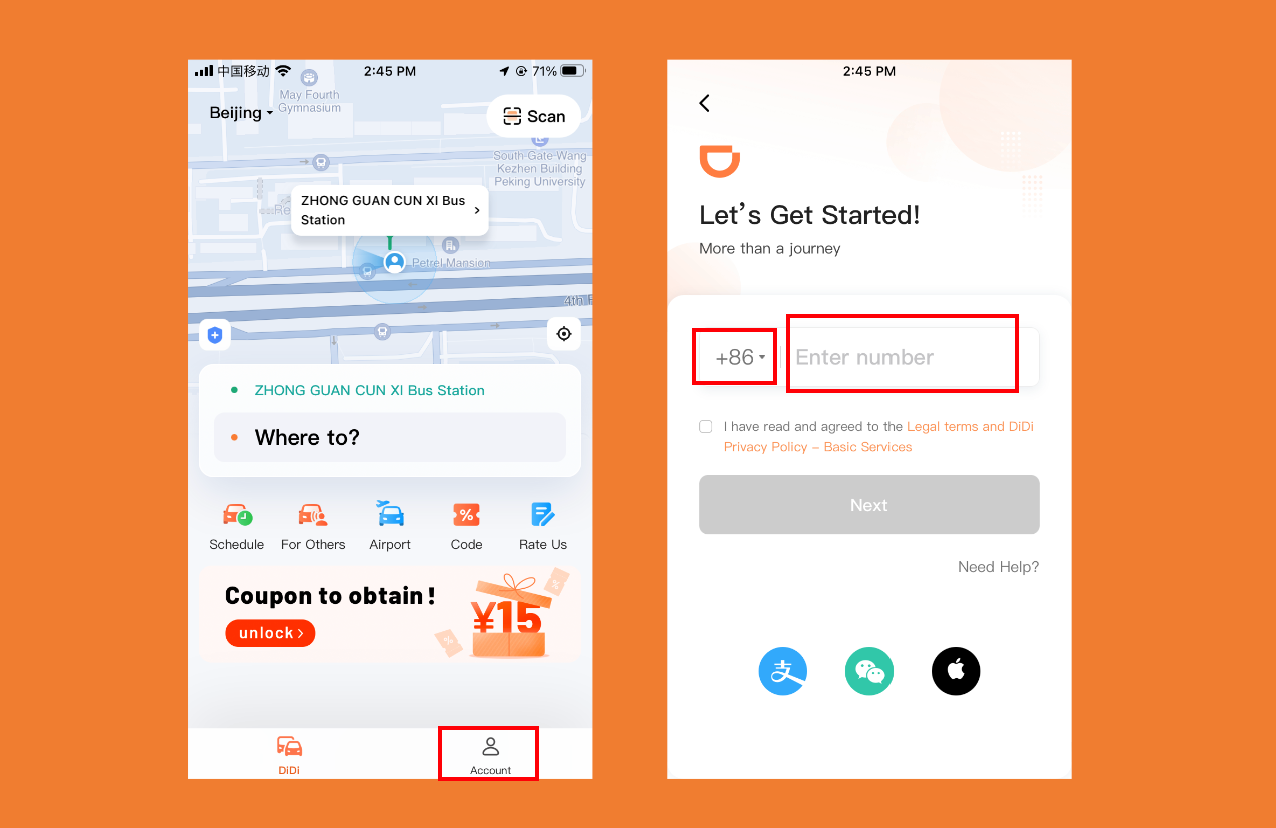
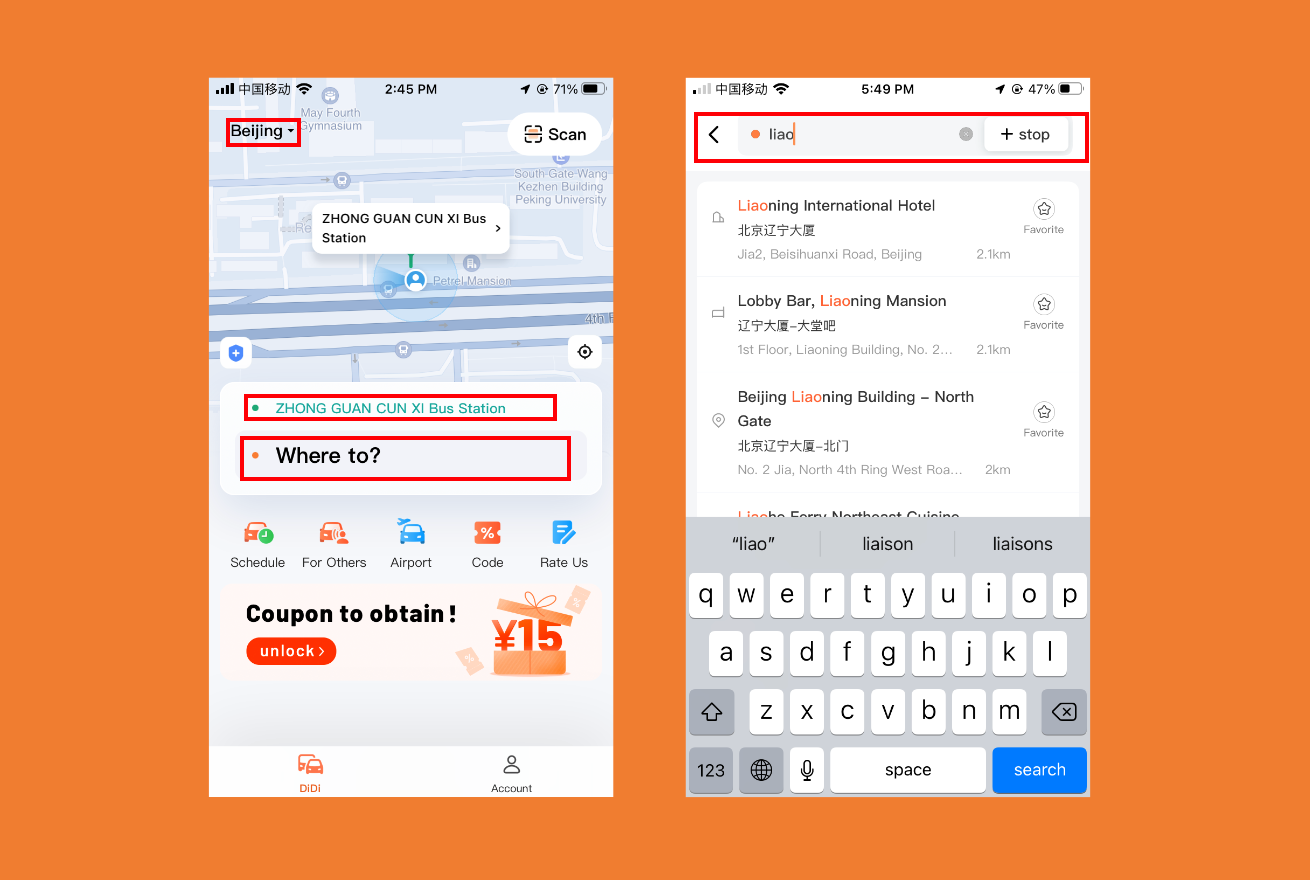
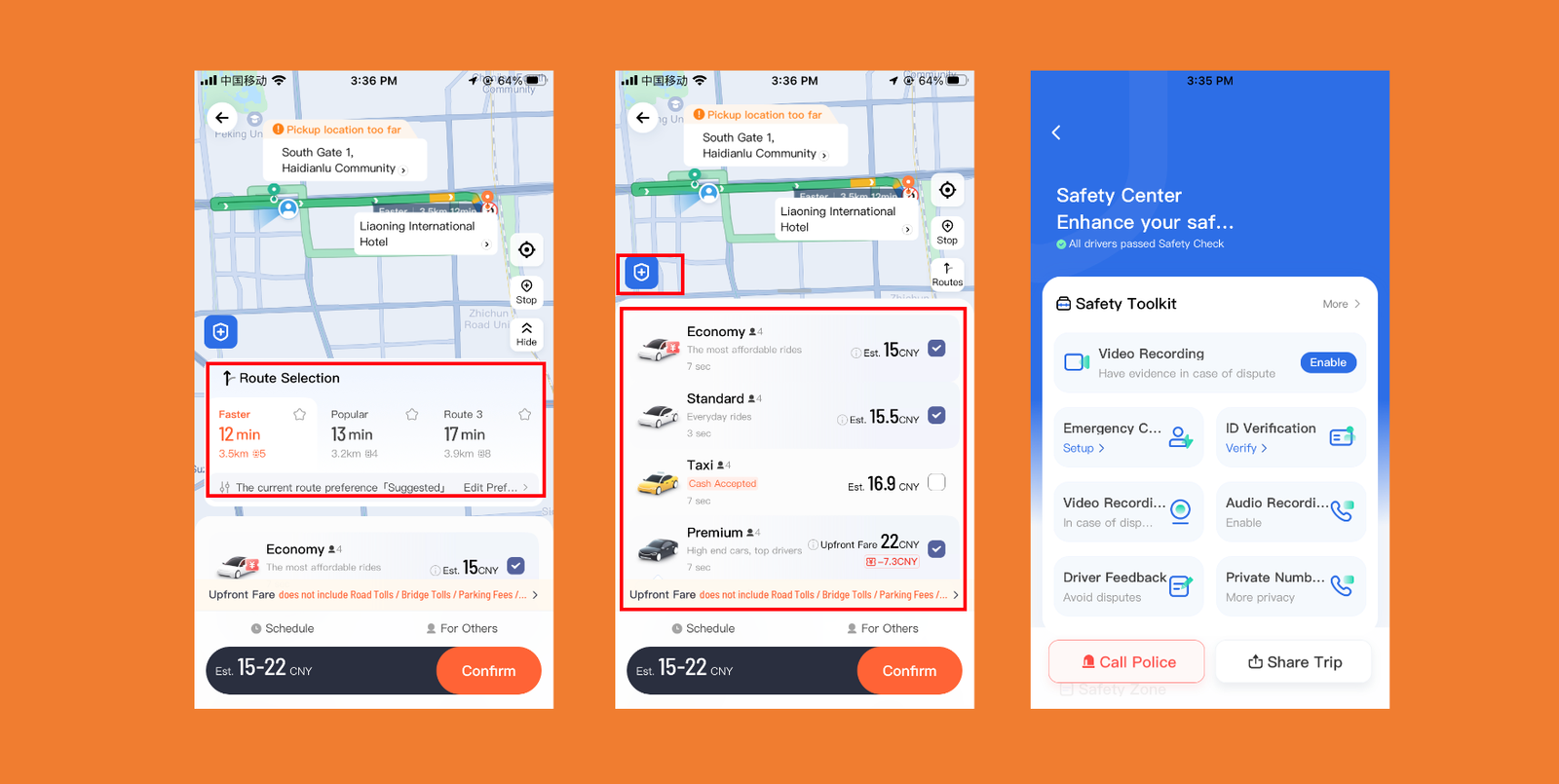
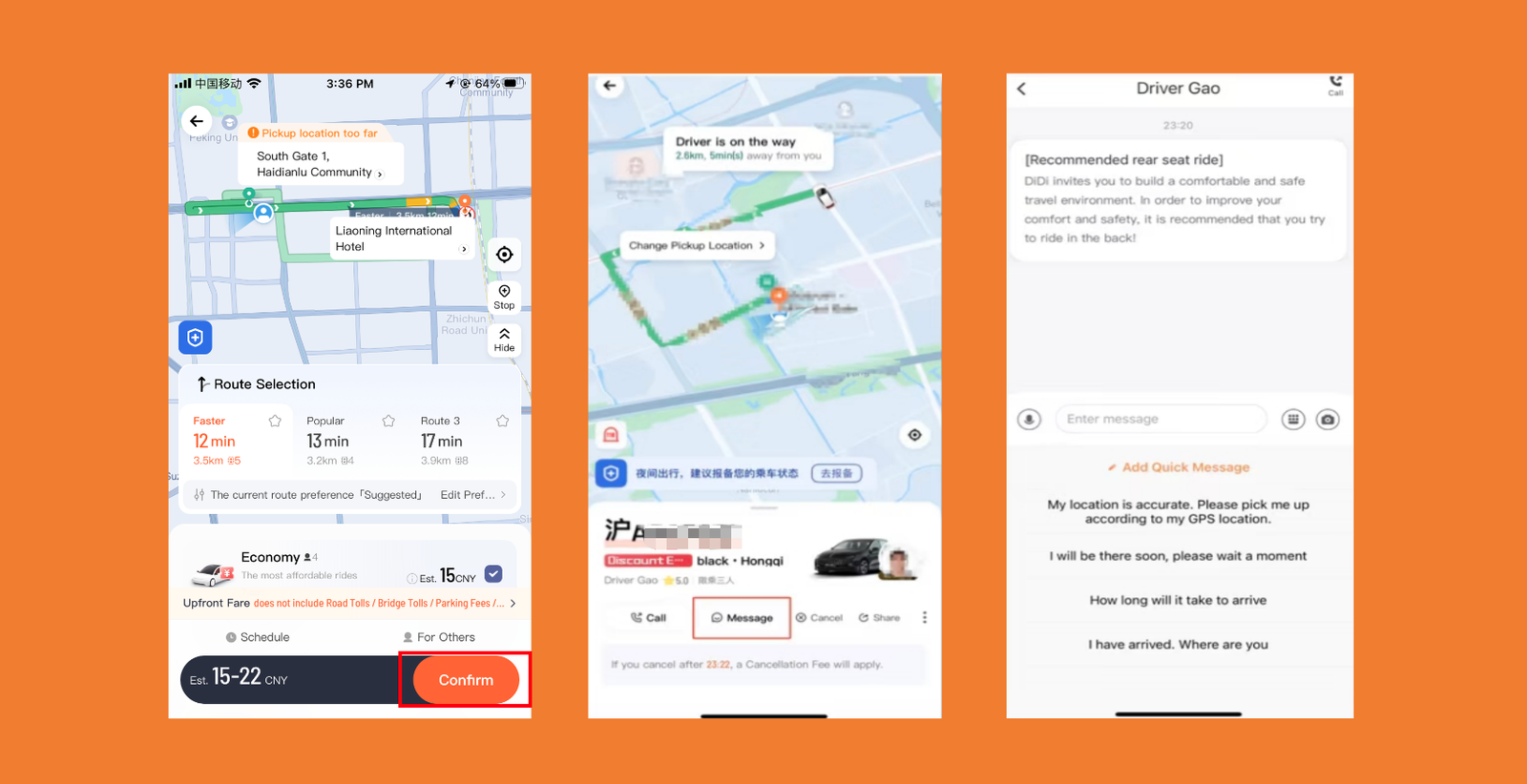

Essential tip for first-time visitors: Save your hotel name and full address in Chinese characters on your phone. Screenshot it. When you need to get back, show the screen to the driver directly. No translation needed, no confusion.
For the full transport breakdown:
👉 Transportation in China: Trains, Flights, Metro & Didi

After connectivity and payments, translation is the tool that makes daily life in China navigable — and the good news is that you don’t need to learn a single word of Mandarin to get by.
Let’s be clear about something first: Chinese is one of the hardest languages in the world for English speakers to pronounce. It’s a tonal language, which means the same syllable spoken with a different tone has a completely different meaning — or no meaning at all. Attempting to use memorized phrases without proper training often creates more confusion than it solves. So forget the phrase lists. Use your phone instead.
Google Translate is the tool you will rely on most as a first-time visitor — but remember, it is blocked in China without a VPN. This is yet another reason the VPN is non-negotiable before you fly. Once your VPN is running, Google Translate gives you three features that genuinely change how you experience China:
The most effective communication strategy for first-time visitors in China is not speaking — it’s showing. Save your hotel name, address, and the names of your key destinations written in Chinese characters on your phone. A screenshot works perfectly. Show it to your Didi driver, a taxi, a shop assistant, or anyone you need help from. No pronunciation required, no misunderstanding.
Outside of tourist hotspots in Shanghai and Beijing, you will encounter very few people who speak English in everyday situations — shop assistants, restaurant staff, metro workers, street vendors. Apps bridge that gap almost completely for practical daily interactions.
But here’s the thing: if you travel with a YellowBird Tour guide, none of this is something you need to worry about at all.
Every YellowBird Tour guide is a native local — born and raised in the region you’re visiting — who speaks fluent English. That combination is something no app can replicate: they don’t just know the language, they are the language, the culture, the food, and the unwritten social rules all in one person.
With a YellowBird guide by your side, you don’t need to:
Your guide handles every interaction — from negotiating at a market to explaining the significance of a temple ceremony — while you focus entirely on the experience.
First-time visitors to China who travel with a native English-speaking guide consistently report that it transforms the trip. Not just logistically, but experientially. You stop managing and start discovering.
👉 Explore YellowBird Tours with native English-speaking guides across China

The two main food delivery apps for first-time visitors to China are:
Neither app has a full English interface. But there are practical workarounds:
Meituan requires a Chinese +86 number to receive a one-time password (OTP) when you sign up directly through the app. However, there is a clean workaround: register via your WeChat account login, which works with a foreign number and avoids the +86 requirement entirely.
If you already have WeChat set up with your foreign number before leaving home, you can log into Meituan through WeChat — no Chinese number needed.
Fair warning and genuine compliment: many first-time visitors who figure out Meituan report ordering delivery even when they’re not tired — because fresh food delivered to your door in 20–30 minutes for the price of a coffee is genuinely hard to resist once you’ve tried it.

You may not plan to shop, but you will almost certainly need something you forgot, broke, or didn’t expect to need during your trip.
Practical uses for first-time visitors to China:
In most major cities, delivery arrives within 30 minutes to a few hours.
Your first 48 hours go much more smoothly when the basics are covered:
For related reading:
A lot of first-time visitors to China underestimate travel times inside the country. China is vast, and whether you have 7, 10, 14, or 21 days makes an enormous difference to what you can realistically see and experience.
If you are still building your route:
👉 How Many Days Do You Need to Visit China?
Do first-time visitors to China need a VPN?
You don’t legally need one, but without a VPN, Google Maps, Google Translate, Gmail, WhatsApp, Instagram, Facebook, and YouTube won’t work. Most first-time visitors find a VPN essential for basic daily navigation and communication. Install and test it before you leave — it cannot be downloaded once you are inside China.
Can first-time visitors use Google Maps in China?
Not without a VPN. With a VPN active, Google Maps works but can be occasionally slow. Many experienced travelers in China use Amap (高德地图) for local navigation — it’s highly accurate, covers transit, walking, and driving, and has an English interface.
Is Didi easy for first-time visitors who don’t speak Chinese?
Yes. Didi has a full English interface, handles all driver communication automatically in Chinese, and accepts foreign card payments. You never need to speak to the driver.
Do first-time visitors need a Chinese phone number for Alipay or WeChat?
No. Both apps work with a foreign phone number. Register them at home before you leave so you can receive the SMS verification code normally.
Why is Alipay declining my payment as a first-time visitor?
Almost always a bank authorization issue. Make a physical card transaction at a store first, then retry in Alipay. If it still fails, contact your bank — some require you to explicitly authorize overseas card use before departure.
Do first-time visitors to China need a Chinese number for Meituan?
Meituan requires a +86 number if you register directly through the app. However, you can sign up using your WeChat login instead, which works with a foreign number.
Is English widely spoken in China for first-time visitors?
In Shanghai, Beijing, and international hotels, you will find some English. In most other cities and rural areas, English is rarely spoken at everyday restaurants, shops, or transport services. This is exactly why translation apps, Didi, and setting up Chinese apps before you arrive are so important for first-time visitors to China.
A good travel to China guide for first-time visitors doesn’t stop at visas and sightseeing lists. The real difference between a stressful arrival and a smooth one comes down to preparation: VPN installed, data connected, payments activated, key apps downloaded before you board.
China is an extraordinary destination — and you’ll enjoy every moment of it far more when you’re not standing on a street corner with a broken translator and an empty Alipay wallet.
And for the full picture of planning your trip from start to finish:
👉 The Complete Traveler’s Guide to China
⚠ China autumn travel alert: September–October 2026 China has two major public holiday periods coming

Explore the Silk Road and Qinghai Lake. Uncover ancient history, vibrant cultures, and breathtaking scenery. Begin your unforgettable journey now!

Can you visit Shaolin Temple and Longmen Grottoes on the same trip? Absolutely. Both are

Qinghai Lake or Chaka Salt Lake? If you’re planning a trip through northwest China, you’ve

The China trip cost question is the one everyone Googles before booking, and almost nobody

Introduction: Major News for International Travelers Great news for globetrotters! China has just announced a