 English

Travel through Asia
China in September & October 2026: Golden Week, Weather & Best Places
⚠ China autumn travel alert: September–October 2026 China has two major public holiday periods coming
 EnglishEnglish
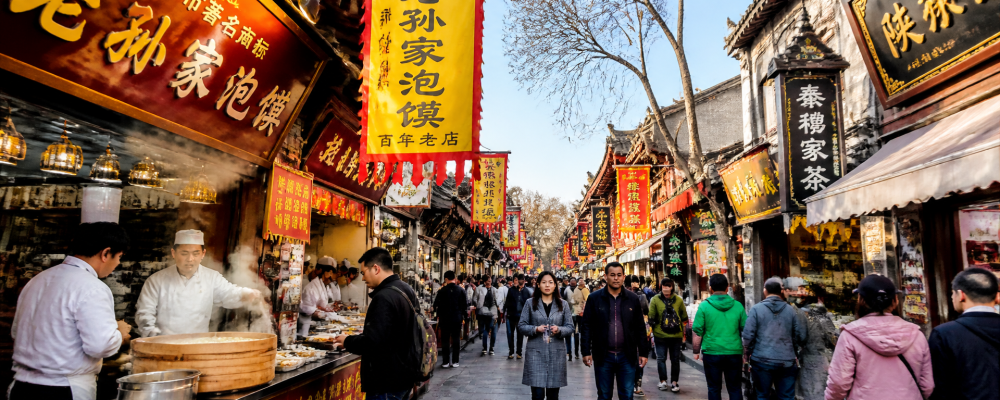

If you’re looking for the ultimate food guide to China, you’ve come to exactly the right place. China will change you — not slowly, not gently — it grabs you by the taste buds on day one and simply refuses to let go. Furthermore, with over 50 ethnic minorities, 14 land borders, and 5,000 years of culinary history, Chinese food is not one cuisine. It’s dozens of them, stacked inside each other like the world’s most delicious nesting dolls. Moreover, just when you think you understand it, it surprises you again. Before you dive into our China tours, read this guide carefully — because your chopsticks deserve to be fully briefed. 🥢
Every good food guide to China must begin with the most important lesson that no one puts in the standard guidebooks. However, we’re putting it front and centre, because you need this information before your very first bakery stop.


You’re standing at a bakery counter somewhere in Shanghai. You spot a perfectly round, dark-filled bun, glistening slightly, smelling faintly sweet. Every instinct you have says: chocolate. You take a confident bite. It is not chocolate.
Welcome to dòushā (豆沙) — sweet red bean paste. This deep mahogany filling is made from azuki beans, slow-cooked and sweetened into a smooth, dense paste. Additionally, it fills steamed buns (dòushā bāo, 豆沙包), pastries, mooncakes, and hundreds of other treats across China. It looks exactly like chocolate spread. However, it is not chocolate spread.

The good news is that once you stop mourning the chocolate that never was, red bean paste is genuinely wonderful. It’s earthy, lightly caramelized, nutty, and satisfying. Moreover, these buns are a classic Chinese breakfast — fluffy, soft, with that dark sweet centre. Think of it as China’s version of a pain au chocolat, except it’s entirely bean-flavoured and chocolate-free.
The darkness scale:
- 🟤 Dark filling → red bean paste (dòushā)
- 🟠 Orange filling → lotus paste or sweet potato
- 🟡 Yellow custard → egg custard bun (nǎilào bāo) — possibly the best surprise of the three
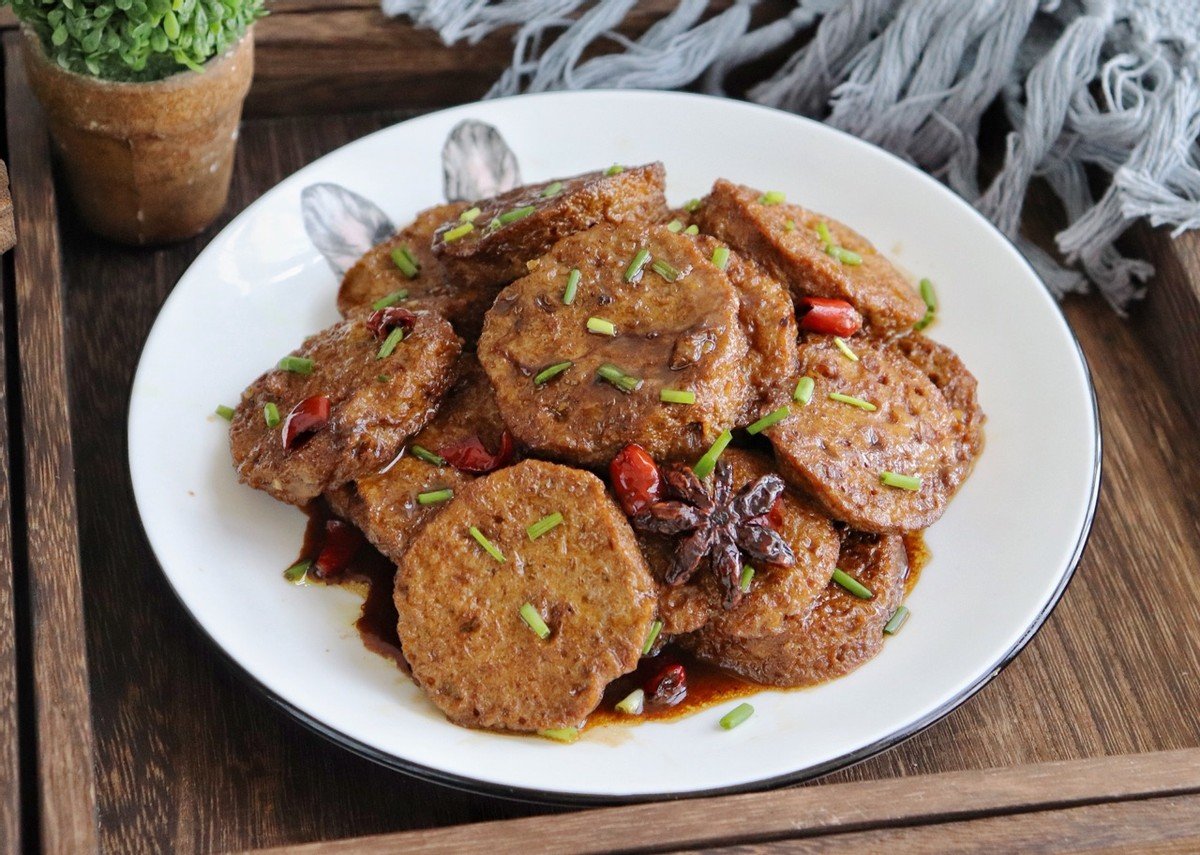
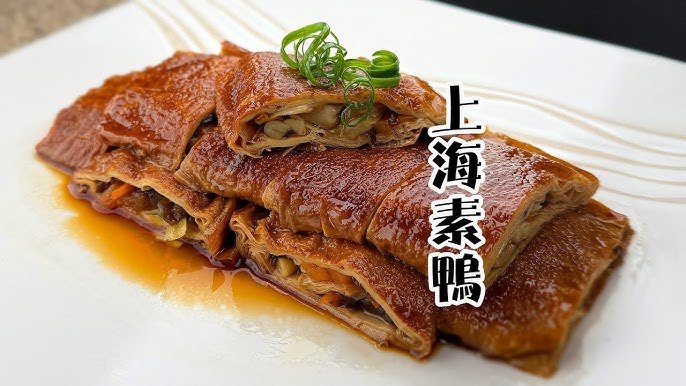
No food guide to China is complete without mentioning one of its most mind-bending culinary traditions: China has a 1,500-year tradition of making vegetables taste exactly like meat. Called the art of mock meat (sùcài fǎng hūn — 素菜仿荤), this tradition comes from Buddhist monastery cooking. Consequently, monks needed satisfying, protein-rich food without breaking vegetarian vows. The ingenious solution was to use tofu, wheat gluten (miànjīn), and mushrooms to recreate the texture, appearance, and flavour of chicken, duck, pork, and fish — so convincingly that you’ll second-guess every single bite.
Pro tip: If you find a Buddhist vegetarian restaurant (sùcài guǎn), order the mock-meat tasting platter. Then film your dining companion’s confusion as they realize that what they assumed was roast duck is entirely plant-based. The moment of revelation is social media gold every single time.
China does not share the Western conviction that sweet things belong at dessert and savoury things belong at meals. In fact, it plays by its own rules entirely. Therefore, as part of this food guide to China, here’s your essential cheat sheet:
Looks sweet → Actually savoury:
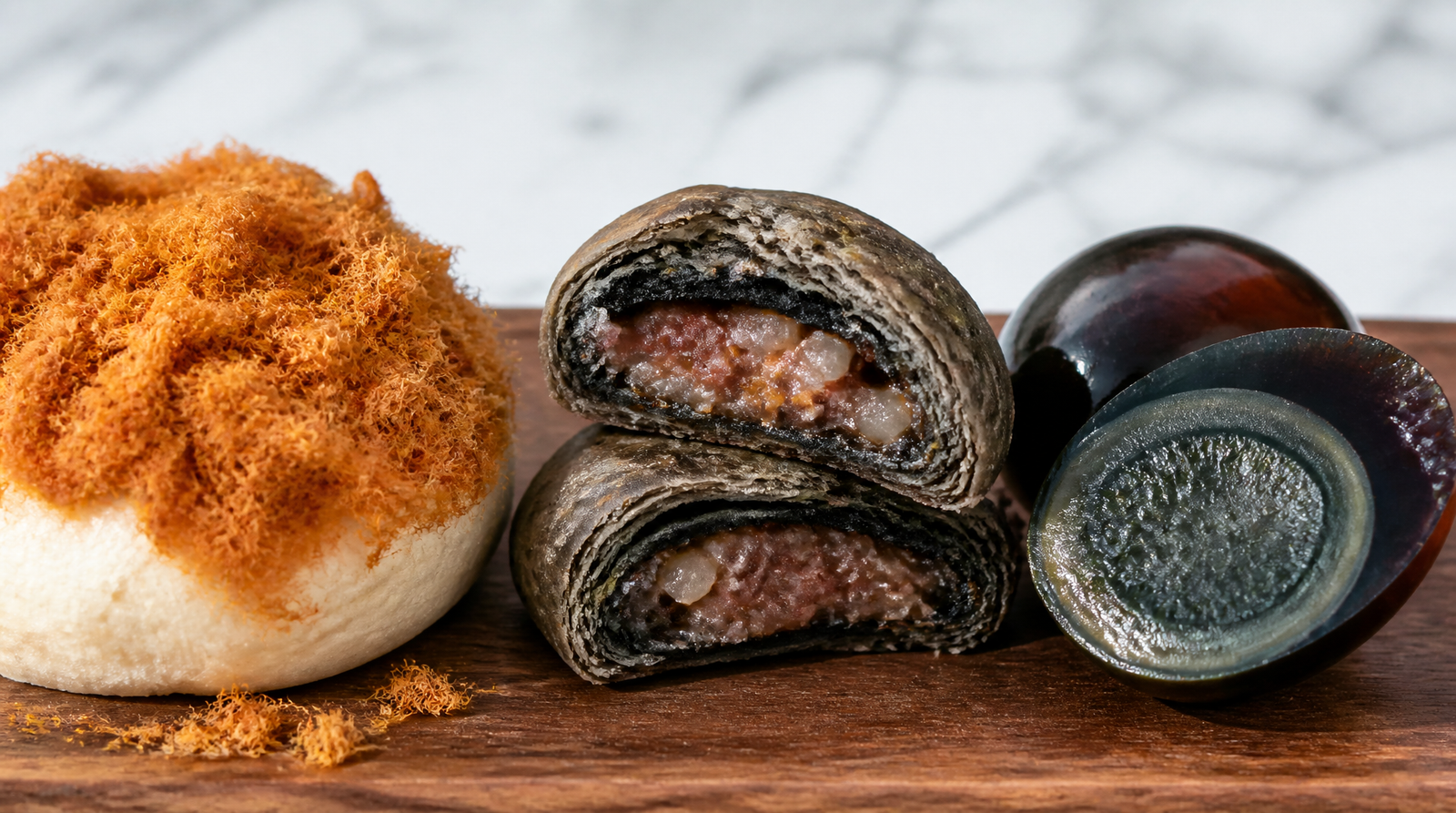
| What you see | What you actually get |
|---|---|
| Fluffy bun with brown sugar-looking topping | Pork floss bun — that “sugar” is dried shredded pork (ròusōng) |
| Elegant dark pastry from Yunnan | Savoury mooncake — filled with ham, lard, and spiced pork |
| Dark preserved eggs displayed as a delicacy | Century eggs / Pídàn (皮蛋) — jet-black, crystalline, deeply savoury |

Looks savoury → Actually sweet:
| What you see | What you actually get |
|---|---|
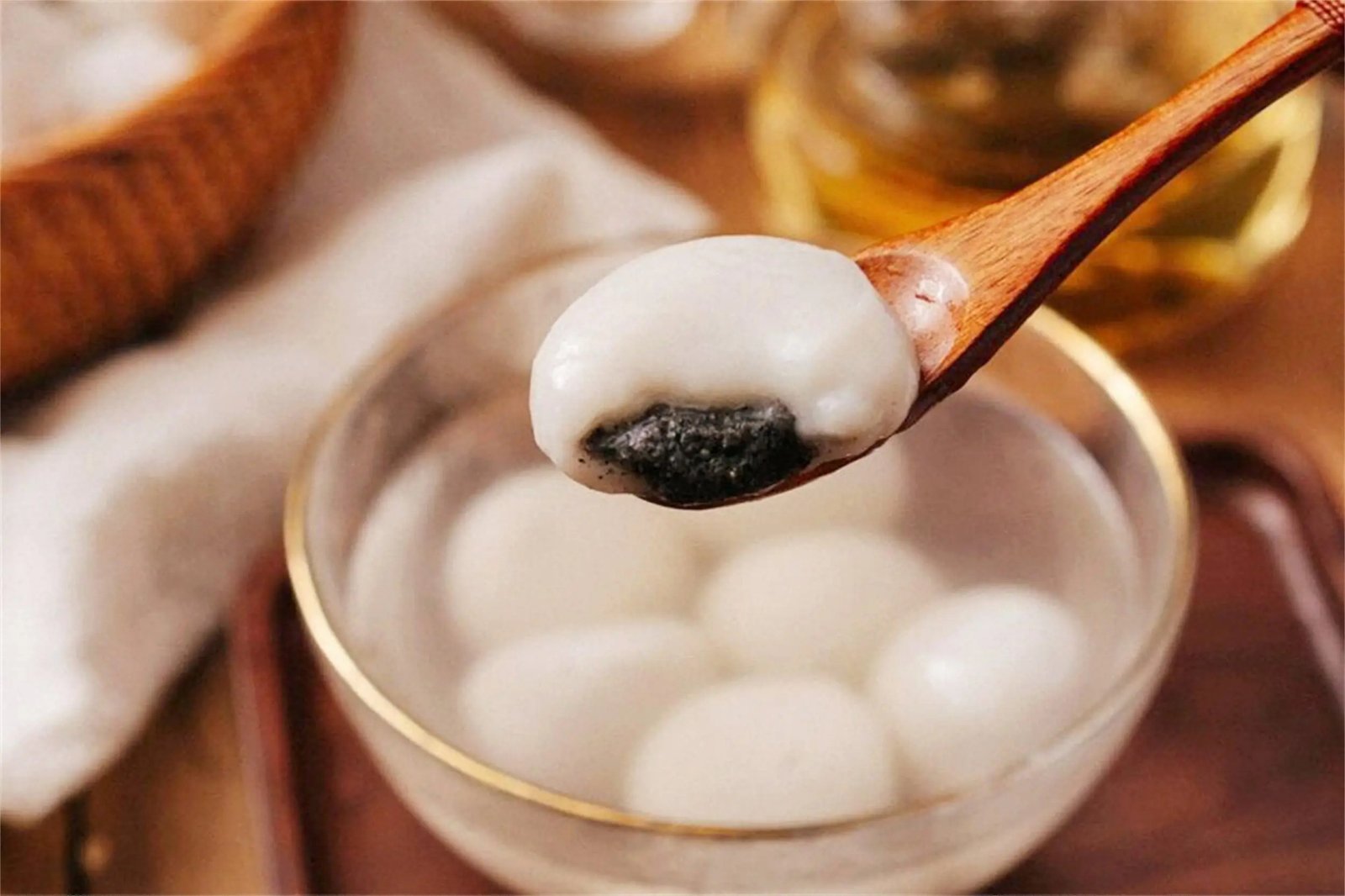
| Small dumplings floating in clear soup | Tāng yuán (汤圆) — filled with sesame or red bean paste. This is dessert. |
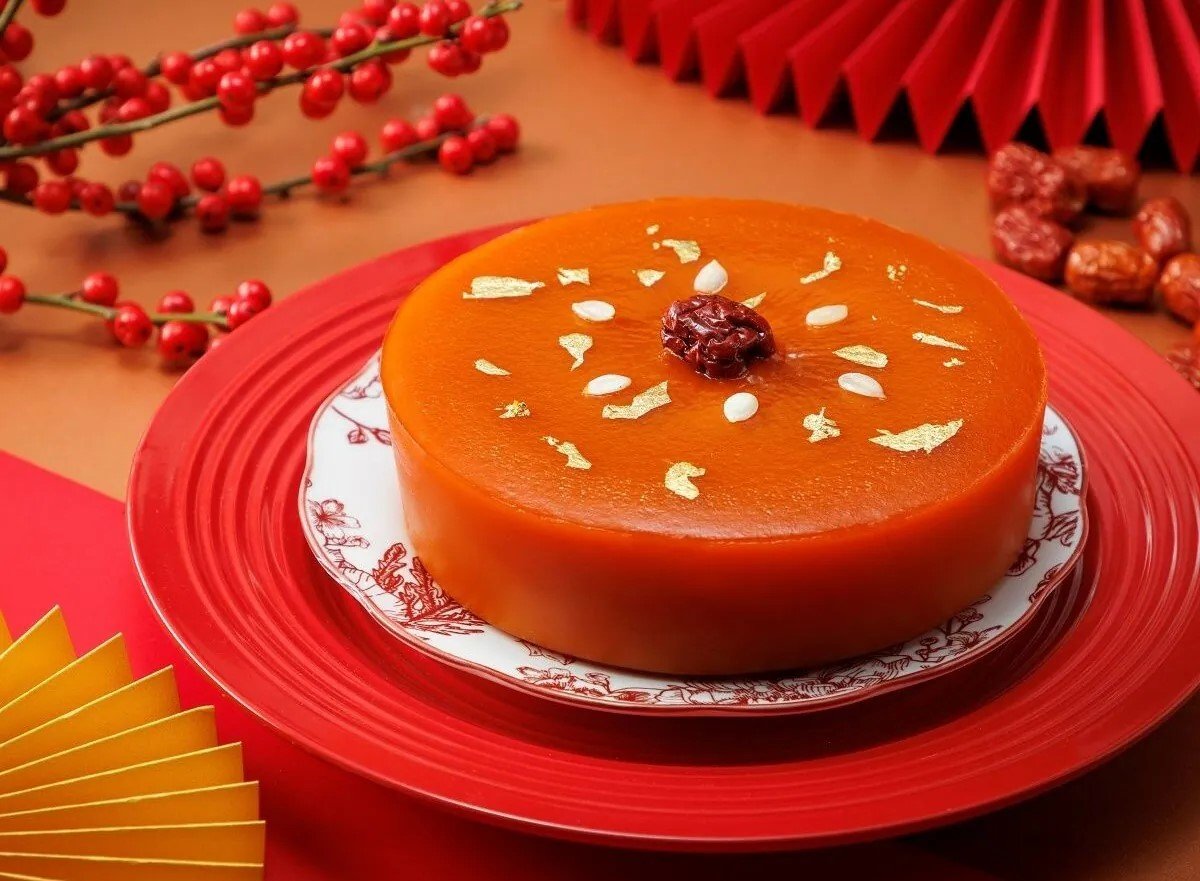
| Glutinous rice cakes at a market stall | Nián gāo (年糕) — traditionally sweet, though northern savoury versions exist |
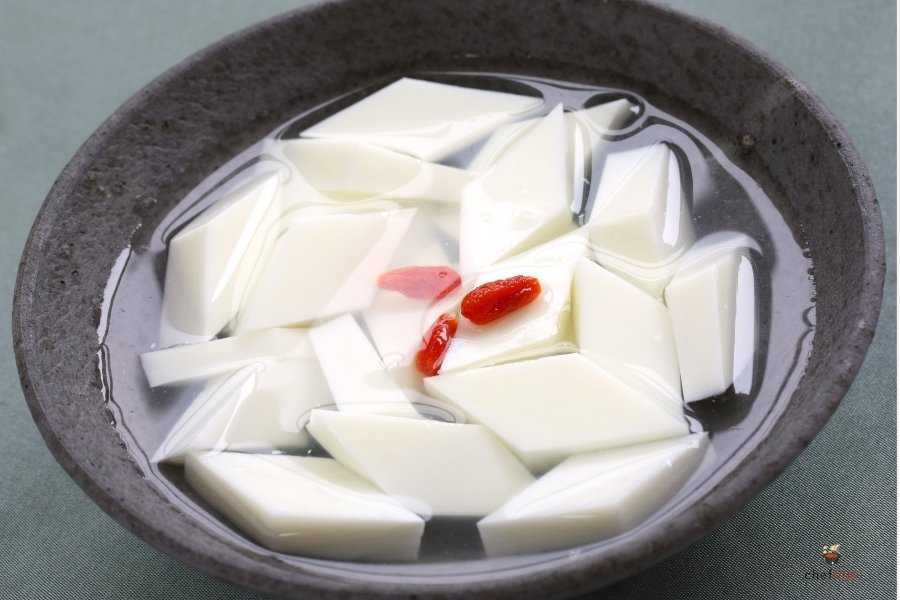
| White silky cubes in a bowl | Almond tofu (Xìngrén dòufu — 杏仁豆腐) — a chilled, lightly sweet almond-milk jelly. Not savoury tofu at all, but closer to a French panna cotta with a delicate floral aroma |

One of the greatest joys in this food guide to China is introducing you to the naming conventions. Translated literally from Chinese into English, many classic dishes sound like they belong in a horror film, a fairy tale, or a very confused cooking show. However, none of them are what they sound like, and all of them are genuinely delicious.
A flaky, golden Cantonese pastry filled with sweet winter melon paste. Absolutely zero wives involved. According to legend, a devoted husband sold himself into slavery to pay for his ill wife’s medicine; she then invented this pastry to earn money to buy his freedom. Consequently, the name stuck forever. Romantic origin. Misleading name. Incredible pastry.
The name translates literally as “Husband and Wife Lung Slices.” Alarm bells ring immediately. However, no actual lungs are required. This Chengdu classic is, in reality, a cold platter of thinly sliced braised beef, tripe, tongue, and tendon, drenched in a gloriously spicy-numbing red oil sauce. The “husband and wife” refers to a couple who famously sold it as street food. Additionally, the “lung” (fèi) in the name is a historical usage meaning offal in general. It is one of the best dishes in all of China. Trust this food guide on that one.
No ants. No trees. Instead, what you actually get is glass noodles stir-fried with minced pork in a rich savoury sauce. The “ants” are the tiny pieces of pork that cling to the transparent noodles. The “tree” is the noodle. Once you see it, you absolutely cannot unsee it. A beautiful, poetic name for a deeply satisfying dish.
No donkeys were harmed in the making of this dessert. In fact, this is a glutinous rice roll stuffed with sweet red bean paste and coated in roasted soybean flour. The yellow powder coating evokes the image of a donkey rolling in the dust. It’s a classic Beijing street snack — chewy, sweet, nutty, and nothing whatsoever like an actual donkey.
This sounds like a snack rejected even by dogs. In reality, however, it’s one of Tianjin’s most celebrated century-old bun brands, founded in 1858. The story goes that the original chef, nicknamed “Doggy” (Gǒuzǐ), was so busy filling orders that he had no time to talk to customers. People joked: “Even the dog doesn’t bother him.” The name stuck, the buns became legendary, and the joke is now irrelevant.
A classic old Beijing street snack: a small baked pastry that cracks open during cooking, consequently revealing the dark bean-paste filling inside — like a toad extending its tongue. It’s golden-crispy on the outside, sweet and dense within. The imagery, once you know it, is uncomfortably accurate and entirely wonderful.
There is no fish in this dish. Furthermore, there never was any fish. The flavour profile — garlic, ginger, doubanjiang (chilli bean paste), vinegar, and sugar — was traditionally used in Sichuan fish cooking. However, when applied to julienned pork, it tastes so evocative of fish seasoning that cooks named it after the technique, not the ingredient. One of the great Sichuan classics — completely fish-free and confusingly named forever.
Here’s the section of this food guide to China that surprises Western travellers most consistently: Chinese breakfast is a full, hearty, and largely savoury meal. There is no cereal, no orange juice, and absolutely no pancakes drowning in maple syrup. In most of Asia, the idea that mornings are for sweet, light foods is simply not a cultural concept.
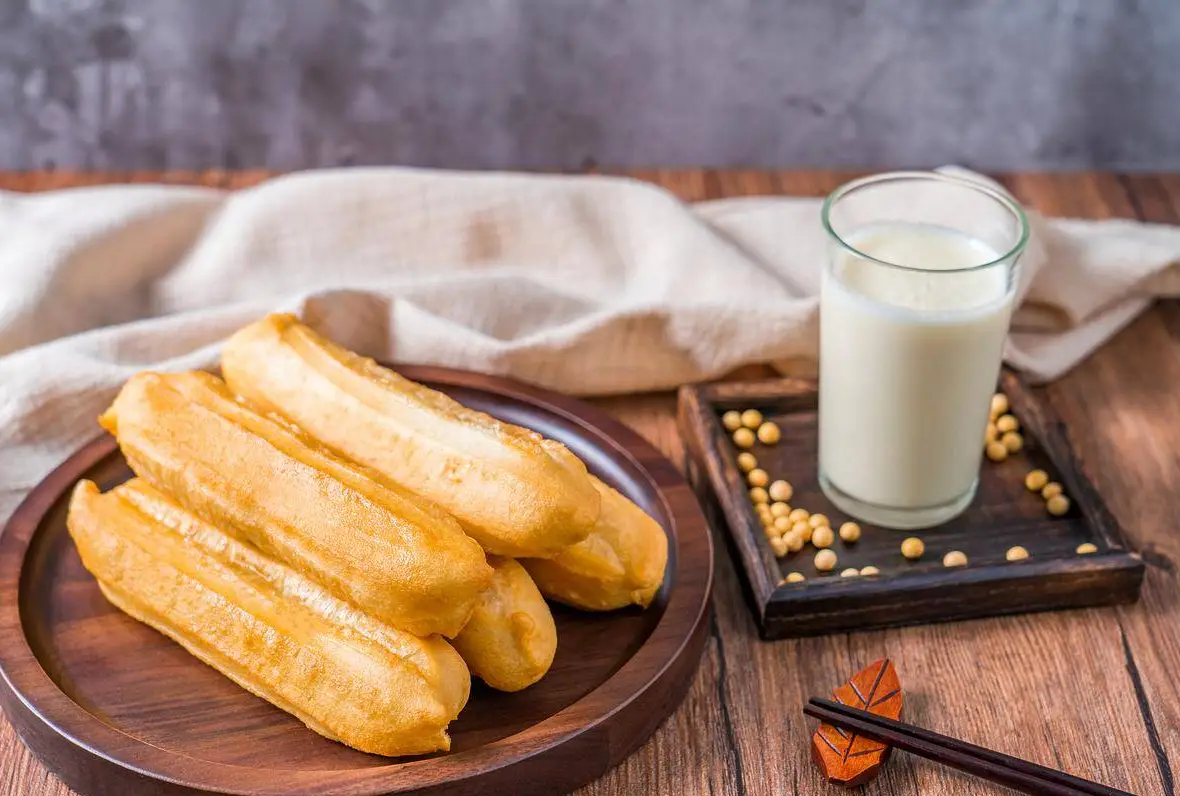
This is the national breakfast combo, eaten across China from Beijing to Guangzhou. Warm soy milk — sweetened or plain — paired with long, golden deep-fried dough sticks. You dip the sticks into the milk before they get soggy. It’s been fuelling China for centuries, and consequently it remains completely addictive.
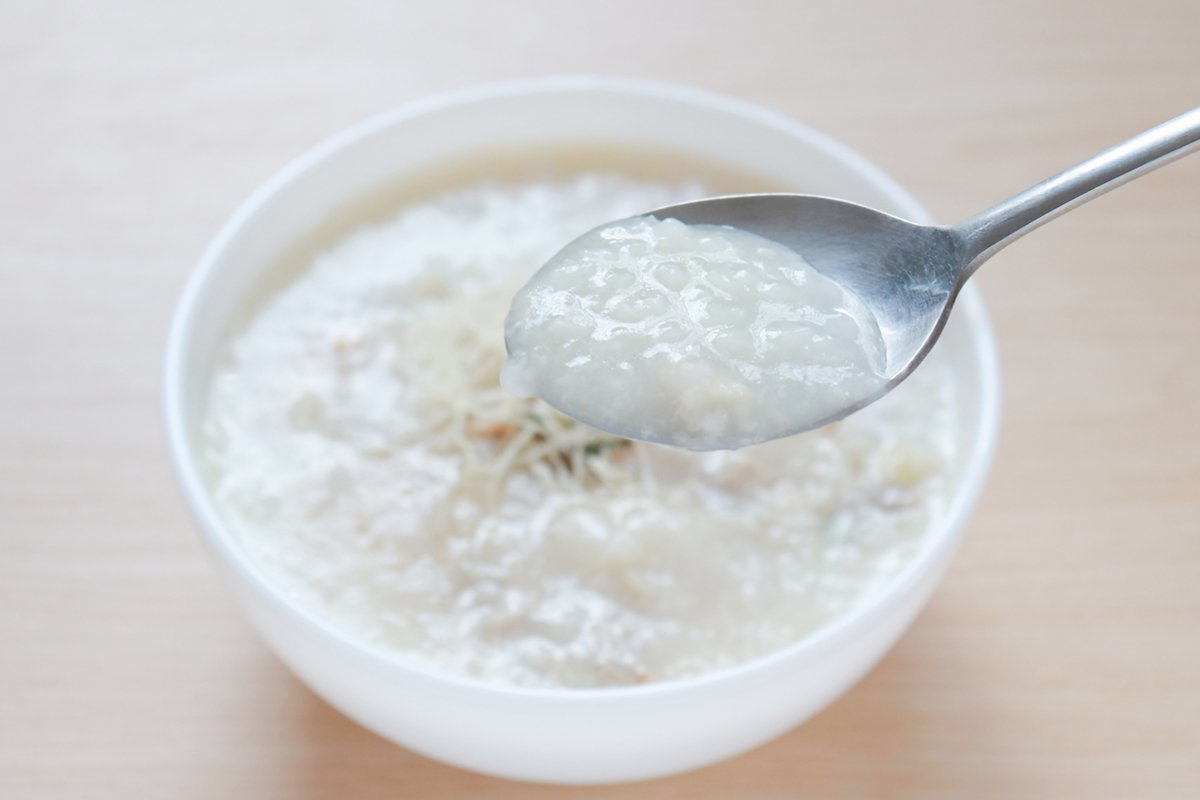
Silky rice porridge cooked low and slow until it becomes almost liquid velvet. Served hot with toppings like pickled vegetables, shredded pork, century egg, or crispy shallots. It’s the ultimate Chinese comfort food and, moreover, the kind of thing you’ll actively start craving on cold mornings.
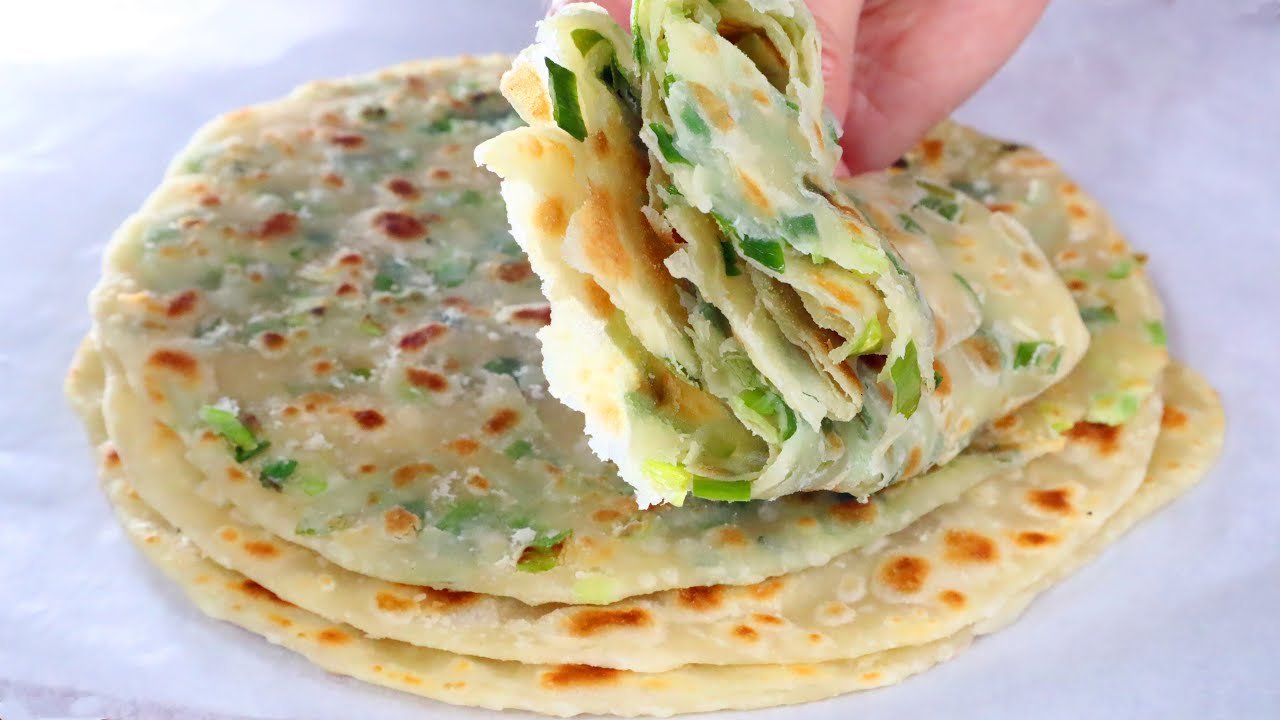
A griddle-cooked egg crepe layered with hoisin sauce, chilli paste, fresh scallions, coriander, and a crispy fried cracker folded inside for crunch. It costs around 10 RMB (~$1.40) from a street cart. It is, without question, the finest handheld breakfast in the world, and Beijing knows it.
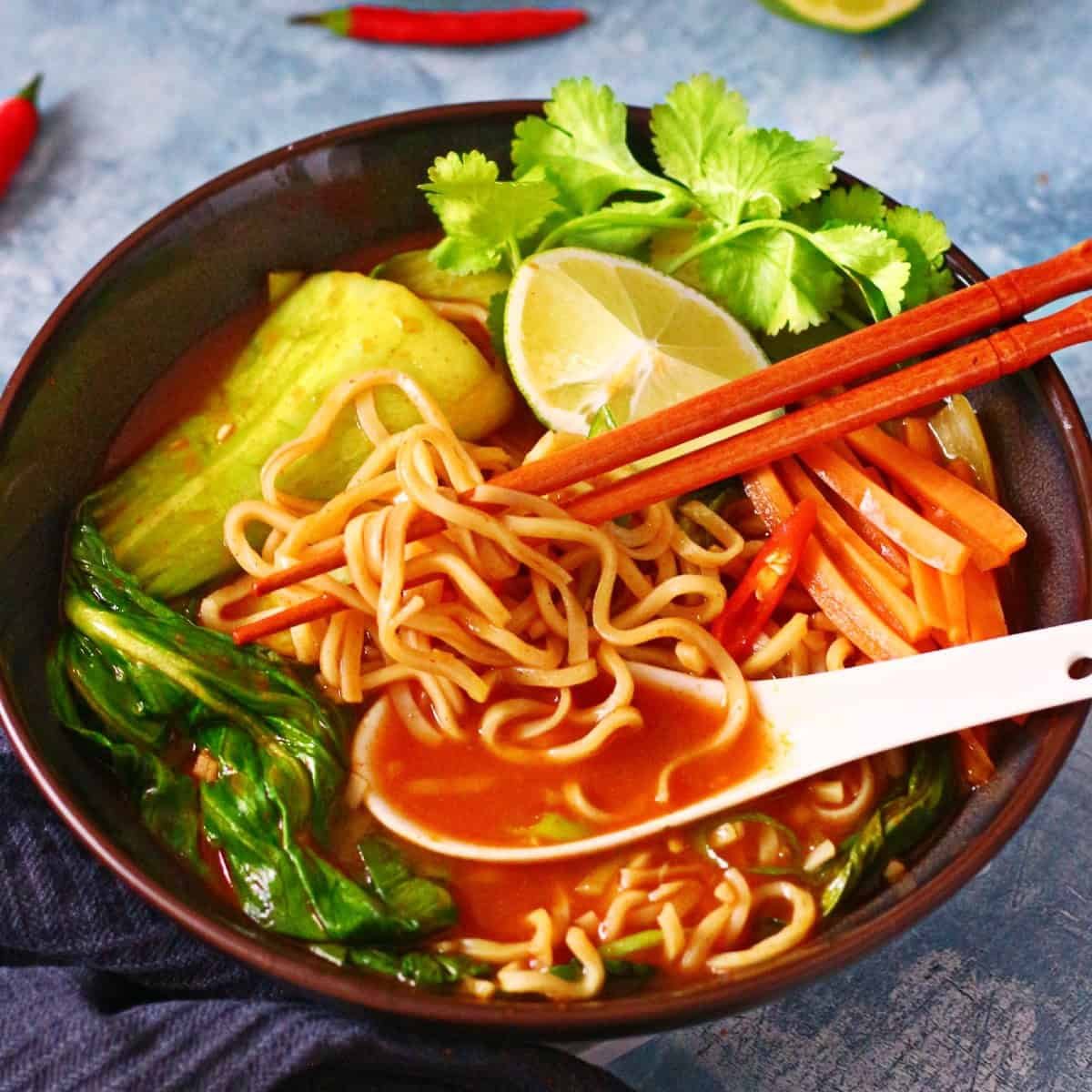
As every honest food guide to China will confirm: yes, a full bowl of noodles at 7am is completely normal and deeply wonderful.
The golden rule of Chinese breakfast: Wake up early. Walk outside. Follow the steam. The best breakfast finds you.

To help you plan your trip, this food guide to China breaks things down city by city. If you’re still deciding which cities to visit, our China trip planner is a great starting point.

Peking Duck (Běijīng kǎoyā — 北京烤鸭): A 600-year-old imperial recipe, originally created for the Emperor and once forbidden outside palace walls. Consequently, it became the most famous Chinese dish in the world. Paper-thin lacquered duck skin, delicate pancakes, cucumber, scallion, and sweet-savoury Peking sauce. Do not leave Beijing without it.
Zhajiangmian (炸酱面): Thick wheat noodles with fermented soybean paste and minced pork, topped with fresh cucumber. Hearty, deeply savoury, and the ultimate Beijing soul food.
Candied Hawthorn on a Stick (Bīngtáng húlu — 冰糖葫芦): Fruit skewers coated in a glassy sugar shell. They look like Christmas decorations and taste like a tart-sweet dream. Furthermore, they are the official snack of hutong wandering.
Donkey Rolling in the Dirt (Lǘ dǎ gǔn): Chewy, sweet, and extraordinary — see Chapter 2 for the full story.
👉 Ready to explore Beijing? Check our guided tours in China to find the right itinerary.

Xiaolongbao (小笼包 — Soup Dumplings): The dish Shanghai is most famous for worldwide. Thin dough encasing pork filling and scalding hot broth. The technique: place on spoon → pierce gently → let steam escape → drink broth first → eat entire dumpling. Skip any step and you will burn your entire mouth. Many travellers have learned this the painful way.
Shengjianbao (生煎包): Xiaolongbao’s pan-fried cousin. Golden crispy bottom, soft fluffy top, broth-filled pork interior. Consequently, it delivers the best of both worlds in one extraordinary bite.
Shanghai Braised Pork Belly (Hóngshāo ròu — 红烧肉): Pork belly slow-braised in soy sauce, sugar, and Shaoxing wine until impossibly tender and glossy. Moreover, this is the dish that will make you reconsider every pork dish you’ve eaten before.

Chengdu Hotpot (火锅): A bubbling communal pot of chilli-infused broth where you cook raw ingredients at the table. Many restaurants offer split “Mandarin Duck” pots — one side volcanic red, the other a gentle pale broth. Therefore, even spice-averse travellers can participate.
Mapo Tofu (麻婆豆腐): Silken tofu cubes in a brick-red Sichuan peppercorn and fermented bean sauce. The lip tingle lasts approximately one hour. Worth every second.
Three Cannons (Sān dà pào — 三大炮): A Chengdu street food performance as much as a snack. A cook hurls glutinous rice balls at a copper plate — BANG BANG BANG — they bounce into a cloud of soybean flour. Theatrical, sticky, delicious, and unmissable.
Dragon’s Beard Candy (Lóng xū táng — 龙须糖): Hair-thin strands of sugar wrapped around crushed peanuts and sesame. Melts on the tongue instantly. Watching the chef pull and fold the sugar into thousands of gossamer threads is genuinely mesmerising.

Biangbiang Noodles: Hand-pulled, belt-wide noodles slapped onto a table. Named after the sound they make. Additionally, the character used to write “biang” has over 50 strokes and was reportedly invented specifically for this one noodle dish.
Roujiamo (肉夹馍 — “The Chinese Burger”): Spiced braised pork inside a crispy flatbread. This dish is over 2,000 years old and still the best street sandwich you’ll find anywhere on earth.
Wife Cake (Lǎopó bǐng): Flaky, sweet, and wonderfully misnamed — see Chapter 2. Hunt one down in Xi’an’s legendary Muslim Quarter.

Chongqing Hotpot: Darker, oilier, and considerably more aggressive than Chengdu’s version. You will sweat. Moreover, you will order it again the following day.
Hot and Sour Glass Noodles (Suān là fěn — 酸辣粉): Sweet potato noodles that turn translucent when cooked, served in a tangy, funky broth topped with fried soybeans. Sour, spicy, savoury, and completely unlike anything in your previous food experience.
Husband and Wife Beef Offal (Fūqī fèipiàn): No lungs. See Chapter 2. Order it. Trust the process. Thank us later.

As any comprehensive food guide to China must acknowledge, some dishes are not for the faint-hearted. However, they ARE for the traveller who wants stories to tell for the rest of their life — and the social media post that breaks all engagement records.
Preserved in a mixture of clay, ash, salt, and lime for several weeks until the white turns jet-black and the yolk turns dark creamy green. The white develops a crystalline snowflake pattern that looks genuinely prehistoric. Furthermore, the smell is sulphurous and challenging. The taste, however — especially served cold with silken tofu and chilli oil — is complex, fascinating, and genuinely rewarding. A Western food website once rated it “the most disgusting food in the world.” Chinese people consider it a classic celebration appetiser. The truth lies somewhere in between, and you won’t know until you try.
To the outside world: feet with toenails. To China: a collagen-rich delicacy braised until fall-off-the-bone tender in black bean sauce or pickled chilli. There’s virtually no “meat” in the Western sense — it’s all skin, cartilage, and gelatin. The technique is to nibble, suck, and eat around the small bones. Consequently, it becomes completely addictive once you get the hang of it.
A Sichuan hotpot speciality: fresh pig brain cooked directly in the spicy broth. The result — reported here with full journalistic honesty — is extraordinarily silky, with the texture of very soft tofu, absorbing all the complex flavours of the broth around it. Strictly for the adventurous. Do not Google it first. Simply order it.
The YellowBird unofficial rule: Try at least one thing from this chapter. You don’t have to finish it. However, you do have to try it. The story is worth it, every time.

As every experienced traveller knows, the further you venture from the tourist trail, the more extraordinary the food guide to China becomes. These smaller destinations consistently surprise even the most seasoned food travellers:
The countryside golden rule: When you see a queue of locals at a small restaurant at noon, join it immediately. Point at what the table next to you ordered. This single strategy produces the best meals of most China trips.

Every honest food guide to China must address this reality: it’s okay to need a break. It happens to almost everyone around week two. Your soul quietly whispers “please… just some cheese.” Therefore, here’s how to find it.
International Fast Food: McDonald’s, KFC, Burger King, and Pizza Hut are plentiful in Chinese cities. Importantly, KFC China is a genuine local institution — deeply localised for decades and selling egg tarts, congee, spiced chicken, and Sichuan rice bowls that don’t exist anywhere else in the world. Always check the local menu even if you’re here for the familiar.
Supermarkets in Major Cities:
Important geographic reality: The further you travel from Shanghai and Beijing, the harder Western food becomes to find. In rural Yunnan, Guizhou, or Xinjiang, therefore, pack emergency snacks — but know that the extraordinary local food you’ll discover there more than compensates.

Before you book your trip, here’s the condensed version of everything this food guide to China has taught you:

Now that you have the most thorough food guide to China you’ll find online, the next step is planning the trip itself. At YellowBird Tour, we’ve spent years building small-group tours across China that treat food not as a refuelling stop, but as one of the main events. Our local guides know which stall has been serving the best jianbing in the neighbourhood for 20 years. Moreover, they know the restaurant with no sign that serves noodles that will ruin all other noodles for you forever.
Whether you’re looking for China travel packages that include iconic cities, or you want expert advice on how to travel safely in China, we have options for every type of traveller and every appetite. Additionally, if you need help deciding how long to spend, our China trip duration guide will give you a clear, practical answer.
Browse all our China tours at YellowBirdTour.com and let’s plan a trip where eating well isn’t just a bonus — it’s the whole point.
Your chopsticks are waiting. 🥢
Disclaimer: Prices, restaurant names, and seasonal availability may vary. We recommend confirming details with local sources or your YellowBird Tour guide on the ground.
⚠ China autumn travel alert: September–October 2026 China has two major public holiday periods coming

Explore the Silk Road and Qinghai Lake. Uncover ancient history, vibrant cultures, and breathtaking scenery. Begin your unforgettable journey now!

Can you visit Shaolin Temple and Longmen Grottoes on the same trip? Absolutely. Both are

Qinghai Lake or Chaka Salt Lake? If you’re planning a trip through northwest China, you’ve
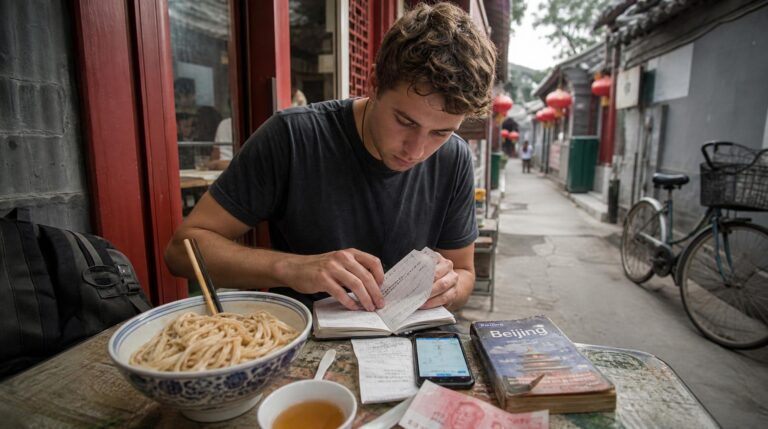
The China trip cost question is the one everyone Googles before booking, and almost nobody

Introduction: Major News for International Travelers Great news for globetrotters! China has just announced a