 English

Travel through Asia
China in September & October 2026: Golden Week, Weather & Best Places
⚠ China autumn travel alert: September–October 2026 China has two major public holiday periods coming
 EnglishEnglish
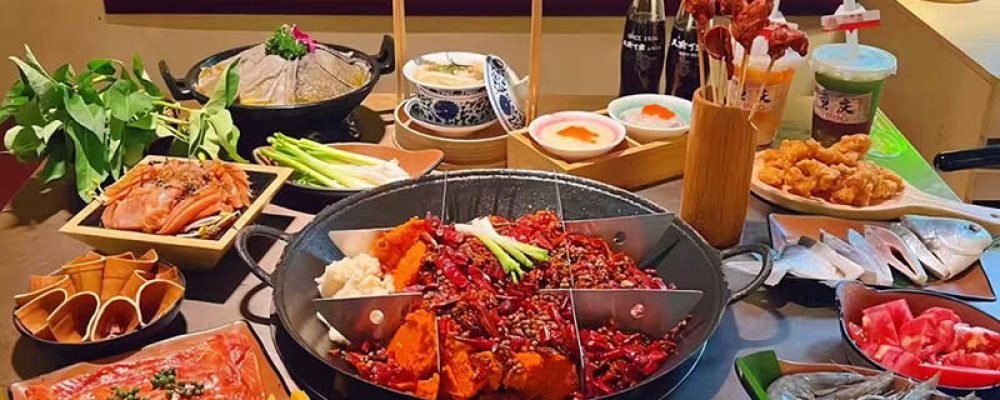

If there is one thing every visitor to Chongqing agrees on, it is this: you cannot leave without trying Chongqing hot pot. Not the watered-down version you may have tried elsewhere — the real thing. The kind that arrives at the table as a violently red, bubbling cauldron of beef tallow, dried chilies and Sichuan peppercorns, with a group of locals around it who look completely unaffected by what is essentially edible lava. This Chongqing hot pot guide will make sure your first — or next — bowl is an experience you remember for the right reasons.
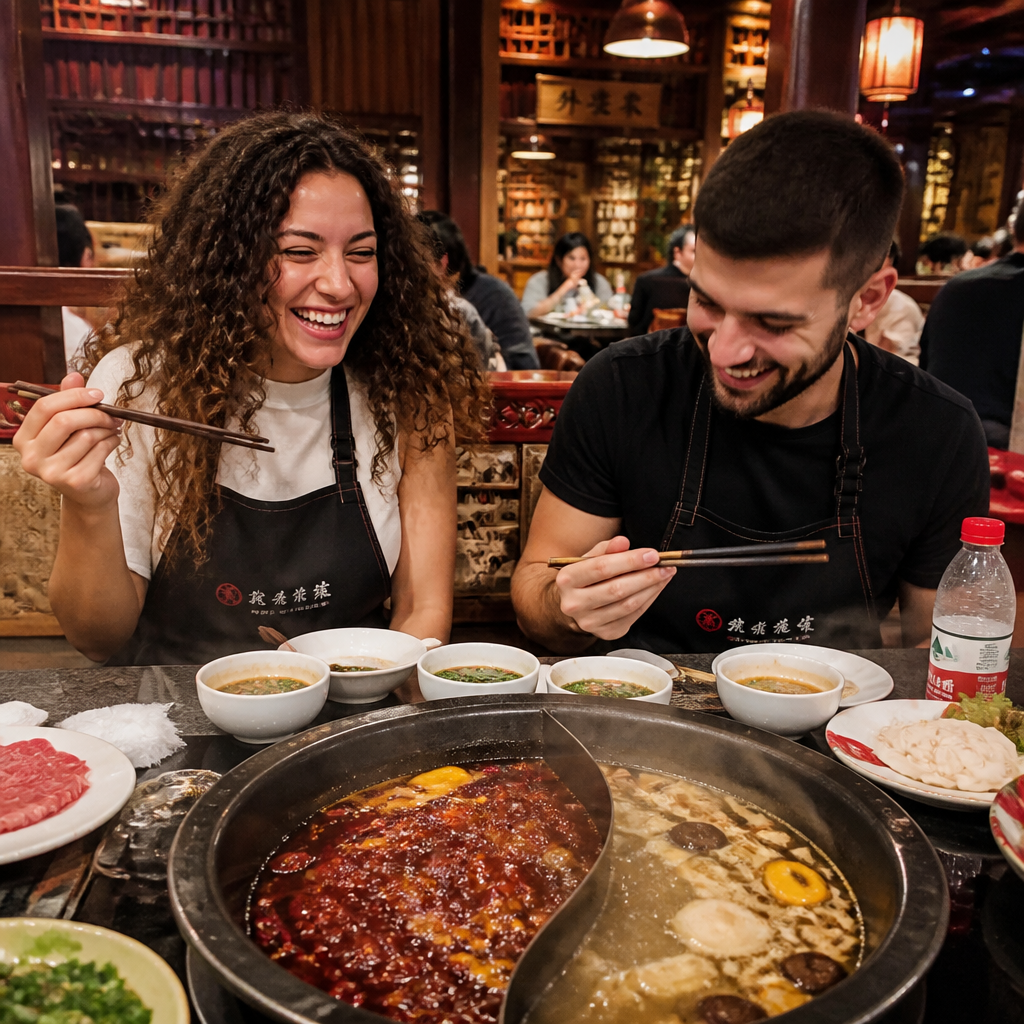

Not all hot pot is the same, and Chongqing-style mala hot pot is in a category of its own. The word mala (麻辣) combines two sensations: má meaning numbing, and là meaning spicy. The result is a broth that does not just burn — it tingles, numbs and then burns, in a sequence your taste buds will either love or loudly protest.
The base of an authentic Chongqing hot pot broth is built on beef tallow — rendered beef fat — combined with Sichuan chili bean paste (doubanjiang), dried chilies and Sichuan peppercorns. This is what gives the broth its deep, rich, almost smoky quality that vegetable-oil versions simply cannot replicate. Health-conscious restaurants now also offer lighter broths, but if you are eating hot pot in Chongqing for the first time, the traditional beef tallow base is the authentic experience.
Most restaurants offer a divided pot — one half fiery mala broth, one half a milder clear or mushroom broth. This is your safety net, and there is absolutely no shame in using it.
Chongqing has hundreds of hot pot restaurants — from old-school street-level joints to massive dining halls — but these are the names that appear consistently across local recommendations and travel guides.


For sheer spectacle, this Chongqing restaurant holds the record as the world’s largest hot pot venue, with approximately 5,851 seats across 888 tables. It serves authentic Chongqing-style hot pot at scale, making it a genuinely unique experience. Worth visiting once if only to say you had hot pot in a room the size of a small airport.

One of the most recognised hot pot chains in Chongqing, frequently cited by locals as a benchmark for authentic mala broth. Multiple locations across the city make it easy to find, and the quality is consistent. A solid first choice for visitors who want a reliable, full-scale Chongqing hot pot experience without the guesswork.

Another widely known Chongqing chain with a strong local reputation. Liu Yishou is particularly popular for its beef tallow base broth and is considered approachable for first-time visitors while still delivering the full intensity of authentic Chongqing-style mala hot pot. Branches found throughout the city centre.

A household name among Chongqing residents, Qin Ma is consistently listed among the city’s top traditional hot pot brands. Known for its rich, deep broth and generous ingredient quality. Recommended for travellers who want the experience that locals themselves seek out rather than tourist-facing adaptations.

Described as a quintessential Chongqing hot pot experience with a particularly rich, spicy broth. Recommended across community travel forums for delivering the atmosphere and flavour combination that defines the city’s hot pot culture — noise, heat, and great food in equal measure.
📍 Tip
Most of these restaurants are concentrated around Jiefangbei (解放碑), Chongqing’s main commercial district, and along the Nanbin Road riverside strip — both of which are conveniently on the route covered in our 5-Day Chongqing guided tour. Your guide will help you navigate the menu, confirm spice levels, and order the dishes that locals actually eat — as covered in the full Chongqing 5-day itinerary.
One of the most useful things this Chongqing food guide can tell you is that spice levels are negotiable — if you know to ask. Most restaurants offer:
If you are visiting as part of a guided tour, your guide will help you navigate the ordering — one of many practical advantages covered in our 5-Day Chongqing itinerary, where hot pot features on the very first evening.

The beauty of mala hot pot is that the broth is only half the experience. What you cook in it matters just as much. Here is what locals consistently order:
Here is where many visitors go wrong: Chongqing hot pot is typically served with a sesame oil dipping sauce — not a soy-heavy sauce like you might expect. The cool, nutty oil provides relief against the spice and is an essential part of the eating rhythm.

Chongqing spicy food extends well beyond hot pot. If you want a quicker, cheaper, equally punishing experience, order Chongqing small noodles (小面, xiǎo miàn) — thin noodles served in a spiced broth with chili oil, Sichuan peppercorn and peanuts, typically eaten for breakfast by locals. Yes, breakfast. Chongqing people do not ease into their mornings.
Other dishes worth trying during your visit:
The honest answer is: any time. Locals eat hot pot at lunch, dinner, and occasionally late at night after a long evening out. That said, evening hot pot is the quintessential Chongqing experience — sitting outdoors on a hillside or terrace, watching the city light up along the Yangtze River, surrounded by the sound of bubbling pots and animated conversation.
If you are visiting between March and October, outdoor hot pot spots along the riverbank are at their best. Winter visits are equally popular — there are few better ways to warm up in Chongqing’s damp, foggy cold than a steaming mala pot.

Before you sit down:
While you eat:
After:

A hot pot dinner is genuinely one of the great food experiences in China — and it is best enjoyed as part of a longer stay in the city, not as a rushed standalone meal. Our 5-Day Chongqing guided tour builds in time on the first evening for exactly this — arriving in the city, settling in, and diving straight into your first bowl of mala hot pot with a local guide on hand to help you navigate the menu, the spice levels and the etiquette.
Over five days, you will pair that hot pot experience with Hongya Cave’s illuminated riverside stalls, the street food of Ciqikou Ancient Town, the gravity-defying Liziba monorail station, and the UNESCO-listed Dazu Rock Carvings — all detailed in our complete Chongqing 5-day itinerary guide.
Chongqing will feed you well. Bring your appetite, bring your curiosity — and maybe bring some antacids, just in case.
Ready to taste it for yourself? Explore our 5 Days Magic Chongqing Tour or browse all our China tours to start planning your trip.
⚠ China autumn travel alert: September–October 2026 China has two major public holiday periods coming

Explore the Silk Road and Qinghai Lake. Uncover ancient history, vibrant cultures, and breathtaking scenery. Begin your unforgettable journey now!

Can you visit Shaolin Temple and Longmen Grottoes on the same trip? Absolutely. Both are

Qinghai Lake or Chaka Salt Lake? If you’re planning a trip through northwest China, you’ve
The China trip cost question is the one everyone Googles before booking, and almost nobody

Introduction: Major News for International Travelers Great news for globetrotters! China has just announced a