 English

Travel through Asia
China in September & October 2026: Golden Week, Weather & Best Places
⚠ China autumn travel alert: September–October 2026 China has two major public holiday periods coming
 EnglishEnglish
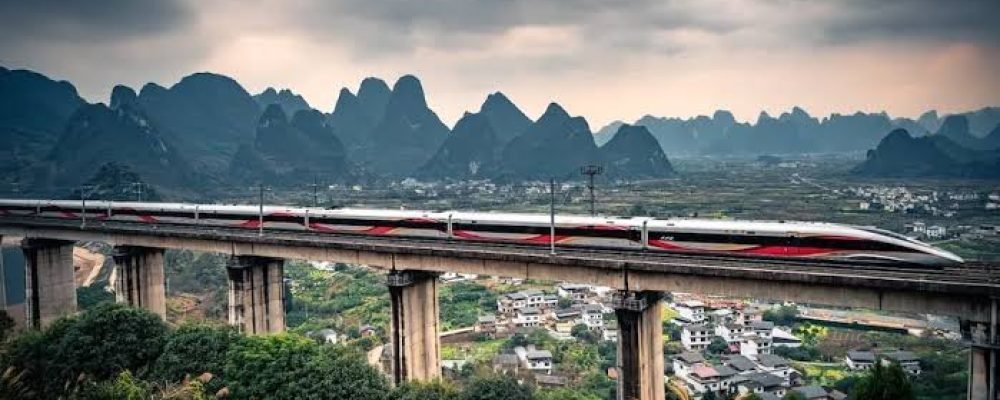

China’s High-Speed Trains for Foreigners are genuinely one of the best ways to travel between cities. They’re faster than planes when you factor in airport time, cheaper than flights, more comfortable than buses, and they connect city centers directly. But if you’ve never ridden one as a foreigner, the process can feel intimidating.
Let me break down everything you need to know to get on a bullet train with confidence, actually understand the announcements, and arrive at your destination without panic.

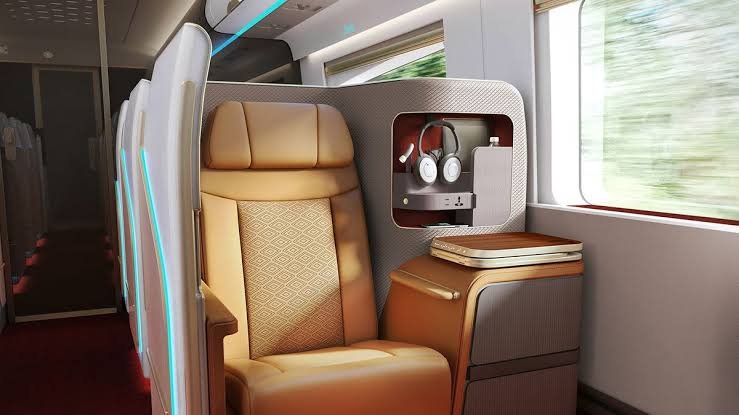
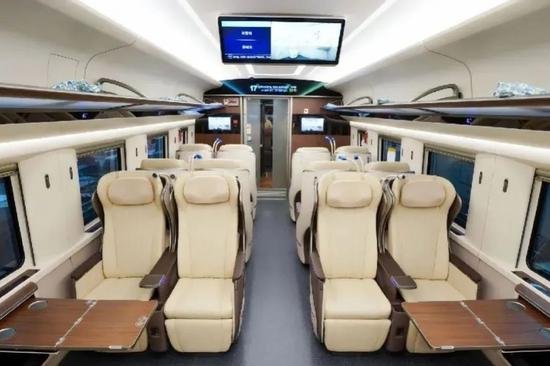
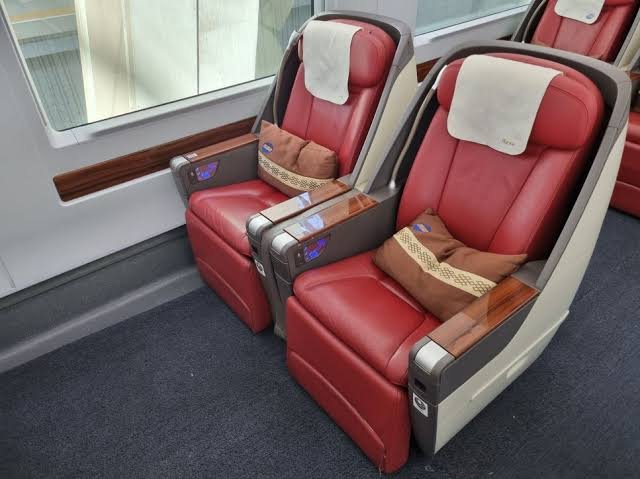
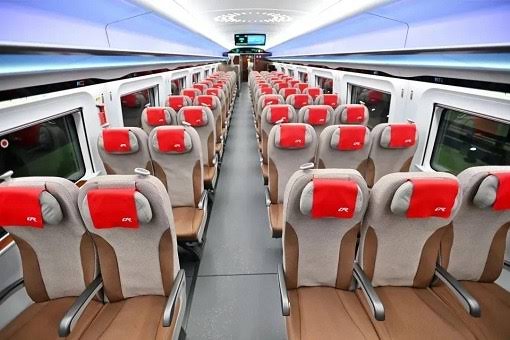
China’s high-speed rail network is absolutely massive. We’re talking 45,000+ kilometers of track connecting virtually every major city. There are different types of trains, and knowing the difference matters.
G (Gaotie / 高铁): The premium bullet trains. These are the fastest, most comfortable, and most expensive. Speeds reach 300+ km/h. Travel time Beijing to Shanghai is about 4.5 hours. Most foreigners ride these.
D (Dongche / 动车): Slightly slower than G trains (200-250 km/h) but still very fast. Cheaper than G trains. Still incredibly comfortable. This is the sweet spot for most travelers.
C (Chexiline / 城市轨道): These are urban rapid trains, mostly within metropolitan areas. Fast but not high-speed. Used for city-to-city commutes within regions.
Z and T trains: These are overnight sleeper trains. Slower, older, cheaper. Popular with budget travelers and students. Fine experience but not the bullet train everyone imagines.
For foreigners, G and D trains are what you want. That’s where the “high-speed” experience lives.
Think airline seating but with more leg room everywhere.
First Class (一等座): Premium seats, more spacious, quiet zones, better meal service. About 30-40% more expensive than second class. Worth it if you’re traveling over 5 hours or value comfort.
Second Class (二等座): Standard reclining seats, plenty of room, Wi-Fi, food service, USB chargers at most seats. This is genuinely comfortable for most people.
Business Class (商务座): Extremely rare for foreigners to book this, but it exists. Think premium airline business class pricing for train travel. Skip it unless you’re expensing the trip.
Most foreigners? Second class is perfect. You’ll be comfortable for 5-10 hours without overpaying.

Honestly, this is the stress-free route. YellowBirdTour offers complete train booking support, meaning your guide handles everything. You show up with your passport, they hand you a ticket, you board. No apps to navigate, no WeChat payments, no confusion about which platform or station.

This is what most tour groups do, and it exists for a reason. If you’re already booking a tour that includes train travel (like Beijing to Shanghai tours or multi-city itineraries), the trains are included. If you need extra tickets, they can help.
Contact them: jessie@yellowbirdtour.com or +86 158 2853 5300

This is China’s official train booking site. Completely free, sometimes cheaper than other platforms, but requires patience.
How to book:
The catch: The site crashes during peak booking times. English translations are sometimes confusing. Payment can fail if your card isn’t recognized as international. But if it works, you save money.
Best for: Flexible travelers with time to troubleshoot, people comfortable with Chinese interfaces, anyone booking months in advance.
Booking sites like ixigo, Klook, or Trip.com sell tickets for a small markup. They handle the 12306 backend, accept international payments, and provide customer support in English. Not the cheapest, but incredibly convenient.
The trade-off: You pay 5-10% more than direct 12306 booking, but customer service is straightforward, refunds are easier to navigate, and someone speaks your language if something goes wrong.
Best for: Travelers who want convenience without complete handholding, people who want backup support, anyone not comfortable using 12306 directly.
Tickets go on sale 60 days before departure. Most seats sell out 15-30 days before travel, especially on popular routes and holidays.
Golden window: 40-25 days before your travel date. Tickets are available, prices haven’t surged, and you have flexibility if dates change.
Avoid: 7 days before departure. Whatever’s left is often sold out or costs way more.
Peak travel periods to skip if possible: Chinese New Year (January-February), National Day (October 1-7), summer school holidays (July-August). During these times, trains book solid months in advance.
China’s system links tickets to passport numbers (for foreigners) or ID numbers (for Chinese citizens). You’ll enter it when booking, and you’ll show your actual passport when you board. They match. It’s simple but non-negotiable.
If you book a ticket under the wrong passport number, the ticket becomes nearly impossible to use. So triple-check this.
Unlike airlines, Chinese trains don’t have dramatic surge pricing. But prices do fluctuate. Premium trains on popular routes might cost 10-20% more during peak times. Early morning or late-night trains are often cheaper.
A Beijing-Shanghai G train seat typically costs 550-650 RMB (roughly $75-90 USD) for second class, depending on time and season. Book in advance, and you’ll get lower fares.
You can refund a ticket up to 15 minutes before departure. The earlier you refund, the less they charge. Refund 30+ days out? Minimal fee. Refund a week out? You lose maybe 20%. Within 48 hours? 50% loss. Within 24 hours? You keep almost nothing.
Changes are easier. You can usually switch to a different train for free or a small fee if seats are available. This flexibility is one reason to book early.

Domestic high-speed stations close gates 10 minutes before departure. So arrive at least 30 minutes early. Luggage goes through security (like an airport X-ray). You show your passport, they scan your ticket, and you go through. This whole process usually takes 15 minutes if you’re prepared.
International tourists get pulled out for extra document checks occasionally. Arriving 45 minutes early gives you buffer room to not panic.
You can bring two pieces of luggage under 20kg each for free. Most backpacks and small suitcases fit. Larger luggage goes in an overhead compartment or at the end of your seat car. No checked baggage in the traditional sense, so everything travels with you.
Oversized items (musical instruments, sports equipment, weird shapes) might need special handling. Contact the station ahead of time if you’re traveling with something unusual.
Stations have multiple platforms (tracks 1-20+). Your ticket shows which one. Signs are in Chinese and English. Find your platform, walk through the designated gate, and line up with your carriage number. Trains are long (16 cars common), and getting off at the wrong end of the train at your destination adds 10 minutes to your walk.
Carriage numbers are printed on the platform near where you board. Match your ticket to the carriage number. It’s easier than it sounds.
Seats are assigned. Your seat number is on your ticket. Luggage goes in the overhead rack or under your seat. The train departs precisely on time (seriously, Chinese trains rarely run late). Announcements happen in Chinese and English. Destination announcements play 10 minutes before major stops.
The bathroom is functional. Not glamorous, but clean and works fine. One bathroom per carriage roughly, so if you need it, go during the first 30 minutes of travel before a long line forms.
You genuinely don’t feel the speed until you see the landscape blurring by. The ride is smooth. Smooth enough that you can work on a laptop, read, or sleep without bouncing. It’s more comfortable than most buses, less crowded than planes.
The food is decent. There’s a dining car on longer trains with hot meals (15-30 RMB, about $2-4). Trolleys come through with snacks, drinks, instant noodles, and souvenirs. Most people bring their own snacks because train food prices are marked up.
Air conditioning is excellent. Sometimes too good. Bring a light jacket even in summer.
It’s a mix of business travelers on laptops, families with kids, elderly Chinese people visiting relatives, and tourists like you. The vibe is quiet and respectful. People don’t talk loudly. Eating is fine but keep it contained. Nobody’s getting drunk or rowdy. It’s genuinely peaceful.
Chinese business travelers will probably stare at you if you’re visibly foreign. Not rudely, just curious. Smile and wave if you catch someone’s eye. Some will try to practice English with you.
Cell signal comes and goes through tunnels and rural areas, but you mostly stay connected. Wi-Fi is theoretically available on newer trains, but it’s spotty. Don’t count on it for important work. It’s there for browsing and messaging mostly.
Squat toilet mostly (though some newer trains have Western-style toilets). Not as clean as airplane bathrooms, but absolutely acceptable. Toilet paper is usually available, but bring your own packets just in case. Hand soap exists. Use it. Wet wipes are your friend.

Even if you don’t plan to book through it, the app has a very useful feature: it shows all trains, prices, and availability for any route. Use it to check your options before booking through whatever method you choose. It’s information-gathering, not commitment.
Early morning trains are crowded with business commuters. Mid-afternoon trains? Half full. You get two empty seats instead of a squeezed-in experience. Same price, way better comfort.
Battery life on trains is long because you’re not moving around, but you’re not moving around. Bring a book, download episodes, load a podcast. The Wi-Fi isn’t reliable enough for streaming. Sitting silently is fine, but entertainment makes 5+ hours better.
You’ll be asked for it when boarding, sometimes during the journey (rare), and definitely at your destination if you’re in a restricted region (Tibet, Xinjiang). Keep it accessible.
Major cities have multiple station names. Shanghai has Shanghai, Shanghai Hongqiao, Shanghai Xuhui, etc. Beijing has Beijing, Beijing South, Beijing West. Buy tickets for the right station. The app and website show which area of the city each station serves. Central areas are usually “South” or the main station.

“What if I miss my stop?”
Announcements come in English and Chinese. The station name appears on small screens above each car. But yes, people miss stops. If you do, get off at the next station and buy a new ticket back or onward. It happens. Not the end of your trip.
“What if my ticket doesn’t work?”
Test it before you arrive at the station. Most tickets are digital now. Scan it on your phone or show your confirmation. If it doesn’t work, go to the ticket counter 45 minutes early. They’ll print a physical ticket. Bring your passport.
“Can I use my foreign credit card?”
Sometimes yes, sometimes no. 12306 is iffy. Third-party apps almost always work. YellowBirdTour can handle payment in whatever currency you prefer.
“Do I need a Chinese visa to ride trains?”
No. Domestic trains don’t require any special documentation. Your passport is sufficient. Some regions (Tibet, Xinjiang) have special entry requirements, but those are separate from the train system.
“Will I understand the announcements?”
The English announcements are clear and understandable. You’ll know which stops are coming. If you’re unsure, ask the person next to you or a staff member. Most staff speak basic English or can point you in the right direction.
If the idea of booking trains on your own feels overwhelming, many YellowBirdTour packages include train reservations and are specifically designed with high-speed rail connections between major Chinese cities.
4 Days Beijing City Tour connects easily to Shanghai via G-series bullet trains, making it a perfect starting point for longer China journeys.
4 Days Shanghai City Tour works as a connection point from Beijing or as a standalone experience, with easy train access to nearby cities like Hangzhou.
3 Days Xi’an Group Tour links perfectly via high-speed rail from Beijing (about 5 hours) or other central cities, letting you see the Terracotta Army without flying.
4 Days Guilin and Yangshuo Group Tour connects south-central China and works as a train destination from Shanghai, Chengdu, or other provinces.
5 Days Zhangjiajie & Fenghuang Ancient Town Group Tour combines train travel through Hunan Province with dramatic mountain landscapes and ancient culture.
3 Days Chengdu Group Tour includes panda encounters and works as a hub for trains heading to Kunming, Chongqing, or Beijing.
6 Days Kunming, Jianshui & Yuanyang Rice Terraces extends south and connects via train to multiple cities across Yunnan Province.
Your guide handles everything: booking, station navigation, luggage coordination. You show up with your passport, they hand you a ticket, you board. The stress of navigating 12306, managing connections, and translating station announcements? Gone. Your job becomes simple: relax and enjoy the 300 km/h views.
Q: Are Chinese high-speed trains actually safe?
Extremely safe. China has invested heavily in train infrastructure. Accident rates on high-speed rail are lower than driving. The technology is proven and maintained meticulously.
Q: Can I bring alcohol on the train?
Yes. You can bring and consume your own alcohol. You can also buy beer/wine from the trolley. No restrictions on this.
Q: What if the train is delayed?
It almost never is. Chinese trains run on an insanely strict schedule. Delays are uncommon enough that when they happen, compensation is immediate and automatic. In five years of travelers, delays are exceptionally rare.
Q: Do I need a reservation separate from my ticket?
No. Your ticket is your reservation. One ticket, one seat, done.
Q: Can I upgrade my ticket after booking?
If seats are available in a higher class, yes. You pay the difference. Contact the station or use 12306 to upgrade.
Q: How early do I need to arrive for connection trains?
If your next train is within 1-2 hours, 30 minutes buffer is tight. If your next train is 2+ hours later, you have time to grab food, rest, explore. Plan buffer time strategically.
Q: Are masks required on trains?
Not anymore. As of 2026, mask requirements have been dropped. Standard illness etiquette (don’t cough on people) applies, like anywhere else.
Q: Will the train be super crowded?
Sometimes. Peak times (weekends, holidays, 5-7 p.m. weekdays) are busier. Mid-week afternoons are relaxed. Plan travel times accordingly if crowd-aversion is a concern.
Ready to ride China’s high-speed rail system? Contact YellowBirdTour for hassle-free train booking:
Email: jessie@yellowbirdtour.com
Phone/ WhatsApp: +86 158 2853 5300
Whether you need a single ticket or an entire multi-city train itinerary, they’ll handle it. Your job: show up with your passport and enjoy the ride.
⚠ China autumn travel alert: September–October 2026 China has two major public holiday periods coming

Explore the Silk Road and Qinghai Lake. Uncover ancient history, vibrant cultures, and breathtaking scenery. Begin your unforgettable journey now!

Can you visit Shaolin Temple and Longmen Grottoes on the same trip? Absolutely. Both are
Qinghai Lake or Chaka Salt Lake? If you’re planning a trip through northwest China, you’ve
The China trip cost question is the one everyone Googles before booking, and almost nobody

Introduction: Major News for International Travelers Great news for globetrotters! China has just announced a